

I. Introduction
For many gay couples and individuals, the dream of having biological children was once thought to be unattainable. However, with advancements in reproductive technology and growing social acceptance, surrogacy has become a viable and increasingly popular option for gay men looking to start a family. Surrogacy provides an opportunity for intended parents to have a child biologically related to them, while also ensuring legal parenthood from birth. This guide provides a detailed overview of gay surrogacy, helping prospective parents navigate each step with confidence.
II. Understanding Surrogacy for Gay Men
What is Surrogacy?
Surrogacy is an arrangement where a woman (the surrogate) carries a pregnancy for intended parents. There are two main types:- Traditional Surrogacy: The surrogate uses her own egg and is inseminated with sperm from an intended parent or donor.
- Gestational Surrogacy: The surrogate carries an embryo created via IVF using an egg donor, with no genetic link to the child.
Why Choose Surrogacy?
Gay men opt for surrogacy for several reasons:- Genetic Connection: One or both partners can have a biological link to the child.
- Control Over Pregnancy: Parents can choose the egg donor, surrogate, and medical process.
- Legal Certainty: Establishing legal parenthood from birth prevents legal challenges.

III. The Surrogacy Process for Gay Couples
1. Choosing Between Independent and Agency-Assisted Surrogacy
- Independent Surrogacy: Parents handle finding donors, surrogates, and legal matters themselves.
- Agency-Assisted Surrogacy: A professional agency manages everything from screening to legal paperwork.
2. Selecting an Egg Donor
Options include:- Anonymous Donors: Selected through an egg bank.
- Known Donors: A friend or relative may donate eggs.
- Clinic-Recruited Donors: Screened by fertility clinics.
3. Finding a Surrogate
Surrogates can be:- A Friend or Family Member: Though rare, some choose this option.
- Agency-Matched Surrogate: Screened for medical and psychological suitability.
4. The Medical Process
- IVF and Embryo Creation: Sperm from one partner fertilizes an egg, creating embryos.
- Embryo Transfer: A viable embryo is implanted into the surrogate.
- Pregnancy & Birth: The surrogate undergoes medical care, with intended parents involved.
5. Legal Steps
Surrogacy laws vary by region. Important steps include:- Pre-birth Orders: Ensure intended parents are legally recognized.
- Birth Certificates: Legal documentation for parental rights.

IV. Costs and Financial Planning
Surrogacy costs in the U.S. range from $100,000 to $200,000, including:- Egg donor compensation: $10,000–$20,000
- Surrogate compensation: $30,000–$60,000
- Medical expenses (IVF, prenatal care): $20,000–$40,000
- Legal fees: $5,000–$15,000
- Agency fees (if applicable): $20,000–$50,000
Financial Assistance Options
- Surrogacy Loans: Specialized fertility financing.
- Employer Benefits: Some workplaces offer surrogacy support.
- Grants & Crowdfunding: LGBTQ+ family-building grants available.
2026 Cost Breakdown for Gay Surrogacy
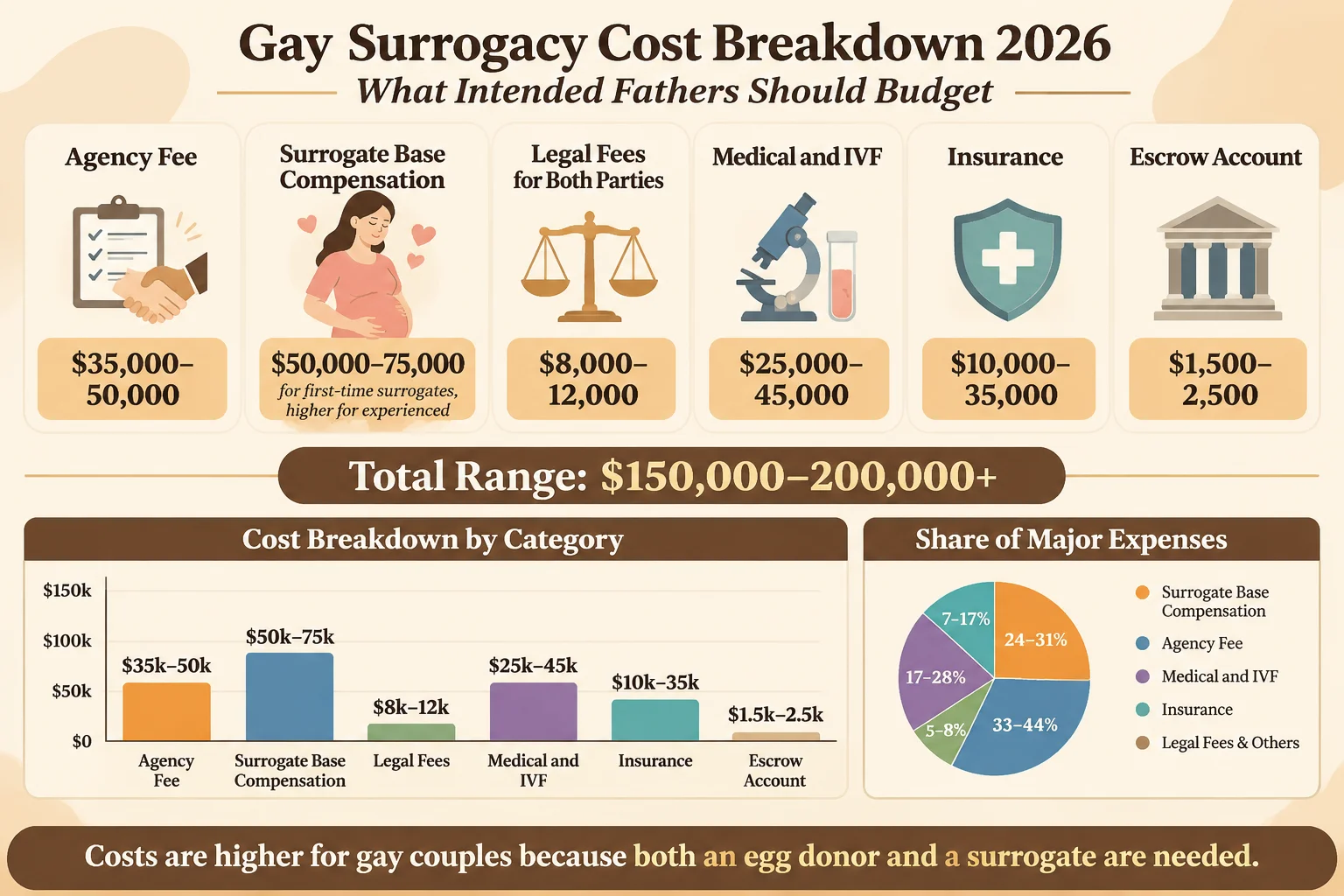
For intended fathers pursuing surrogacy in 2026, total program costs typically range from $150,000 to $220,000, depending on the state, the surrogate’s experience, and the level of insurance coverage required. Agency fees generally run $35,000 to $55,000 and cover matching, screening, coordination, and case management. First-time surrogate base compensation ranges from $45,000 to $65,000, with experienced surrogates commanding $70,000 to $90,000+. Because gay couples need both an egg donor and a surrogate, egg donor compensation of $8,000 to $20,000 is a required line item. Legal costs for both parties usually fall around $10,000, covering contracts, parentage orders, and birth certificate work. Medical and IVF expenses, including egg retrieval, fertilization, embryo creation, and transfer cycles, range from $25,000 to $45,000. Insurance costs vary widely from $10,000 to $35,000 depending on whether a surrogate carries her own policy or a dedicated surrogacy policy is purchased. Escrow management typically adds $1,500 to $2,500.
Shared Embryos and Genetic Links for Two Dads
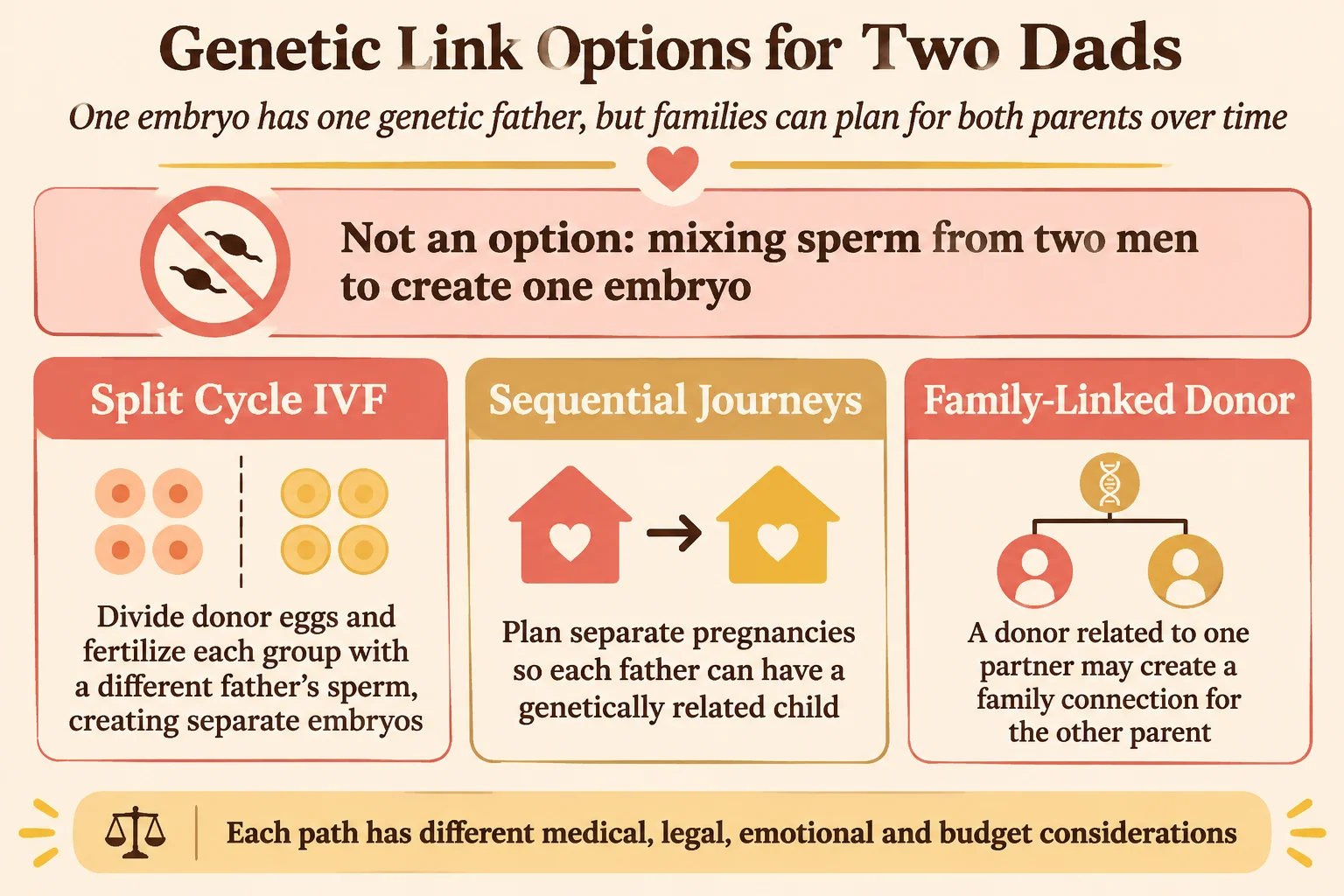
Many gay couples want to know whether both fathers can have a genetic connection to their child. The short answer: a child can only be genetically related to one father. Sperm from two men cannot be mixed for a single embryo. However, there are established ways for both dads to have a genetic link:
- Split cycle IVF: eggs from one donor are divided and fertilized with each father’s sperm, so each dad can have a genetically related child (in the same or separate pregnancies).
- Sequential surrogacies: one child with each father’s genetics, giving both dads a biological child over two journeys.
- Related egg donors: using a donor related to one partner can create a family link for the other.
For the technical details of how shared-embryo arrangements work, see our dedicated guide on whether same-sex couples can share embryos.
Best States for Gay Surrogacy in 2026
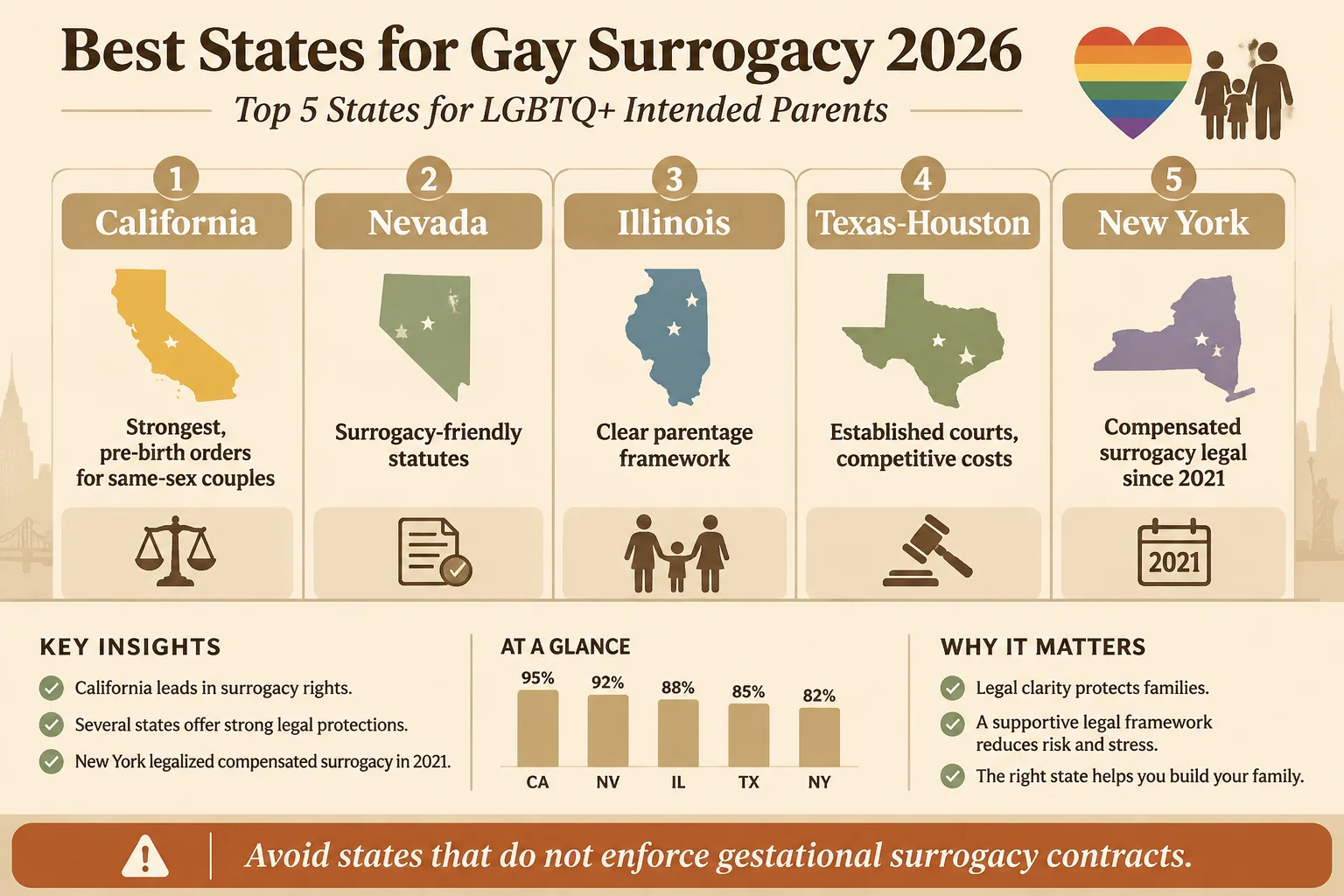
State law remains the single largest legal variable in gay surrogacy, and a handful of states offer the most predictable paths for same-sex intended fathers. California is widely regarded as the most favorable jurisdiction: compensated surrogacy is expressly permitted, and courts routinely issue pre-birth orders naming both same-sex intended parents on the birth certificate from day one. Nevada offers strong statutory protections with clear parentage procedures and is friendly to same-sex couples. Illinois permits compensated surrogacy under a comprehensive statute and has a solid track record with gay intended parents. Texas, particularly the Houston area, remains a practical option with established agency and legal infrastructure, though parentage procedures require careful legal planning. New York legalized compensated surrogacy in 2021 and now offers a regulated framework, making it a viable choice for residents willing to navigate its newer processes. Intended parents should generally avoid states without clear surrogacy statutes or with restrictive laws, including states that criminalize compensated surrogacy or refuse to recognize same-sex parentage. Because laws shift, confirm current rules with a reproductive attorney licensed in your target state before signing any agreement.
How to Choose a Surrogacy Agency as a Gay Couple
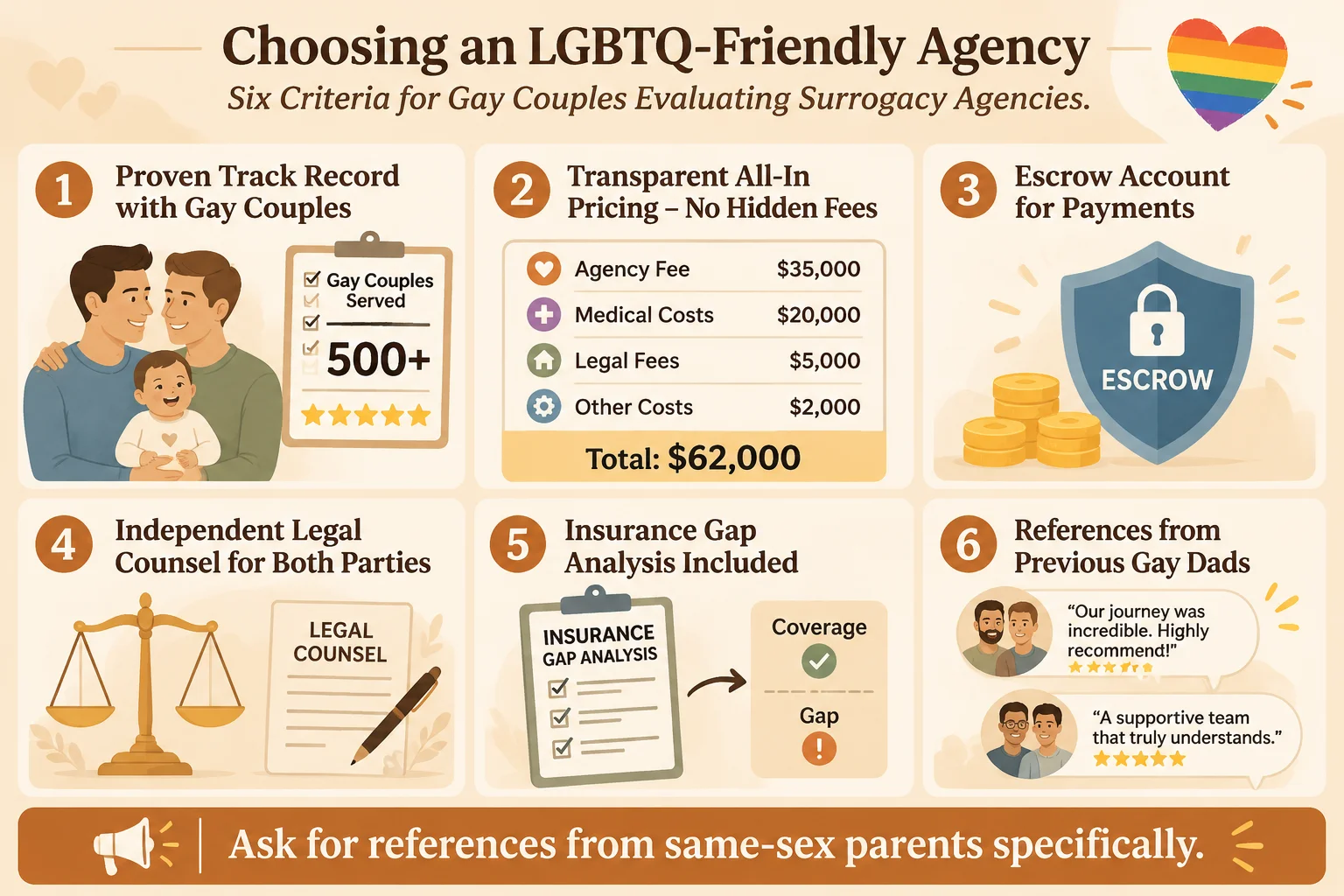
Choosing the right agency is one of the most consequential decisions in a gay surrogacy journey. Start with LGBTQ+ track record: ask how many gay intended fathers the agency has matched and completed in the past two to three years, and request specifics rather than general statements. Demand transparent pricing, including a full fee schedule that separates agency fees, surrogate compensation, and pass-through costs, so you can compare programs accurately. Confirm the agency uses a neutral, third-party escrow account to hold and disburse funds, which protects both you and your surrogate. Verify that the agency requires independent legal counsel for both parties; you should never share an attorney with your surrogate. Ask how the agency handles insurance guidance, including whether it screens surrogate policies for surrogacy exclusions and helps secure dedicated coverage when needed. Finally, request references from gay dads who completed journeys with the agency and speak with them directly about communication, timelines, and how problems were handled. A reputable agency will provide these without hesitation.
Single vs Partnered: Different Legal Paths
Legal strategy in gay surrogacy depends heavily on relationship status. Single intended fathers face additional hurdles in some states: a few jurisdictions require intended parents to be married or have historically favored married couples in parentage proceedings, so single men should prioritize states like California that issue pre-birth orders to single intended parents without a marital requirement. Married same-sex couples generally have the smoothest path in favorable states, where both spouses can be named on a pre-birth parentage order and birth certificate, though confirm that your marriage is recognized in the surrogacy state. International intended fathers face the most complex process: they must plan for the child’s U.S. citizenship documentation, obtain a U.S. passport for the baby, secure any required visa or travel documents for the child’s entry into the parents’ home country, and confirm that their home country will recognize the U.S. birth certificate and parentage order. Work with an immigration attorney and a reproductive attorney in the birth state early, ideally before matching, so the legal plan accounts for citizenship, travel, and recognition issues from the outset.
V. Challenges and Considerations
Legal Barriers
Some countries/states restrict surrogacy for same-sex couples. Researching legal frameworks is essential.Emotional Journey
Surrogacy is a long process, requiring emotional resilience.Social Acceptance & Support Networks
Facing potential discrimination, connecting with LGBTQ-friendly providers is vital.VI. Success Stories
Hearing from other parents can be inspiring:- David & Michael (USA): “After years of research, we had twins through surrogacy. It was challenging but worth it!”
- Carlos & João (Brazil): “Our agency guided us every step of the way, and now we have our beautiful son.”
- James & Andrew (UK): “Legal hurdles were tough, but seeing our baby made it all worthwhile.”
VII. Conclusion
Gay surrogacy is a life-changing journey, allowing LGBTQ+ individuals to build families with a biological connection. Proper planning, legal guidance, and emotional support make the process smoother. If you’re considering surrogacy, consult reputable agencies and legal experts to turn your dream of parenthood into reality. For practical insights on preparing for parenthood, check out our guide: Preparing for Parenthood: Practical Tips for Intended Parents in the Surrogacy Process.Related reading: Can a Gay Man Have a Child With a Woman? | Can Two Gay Men Have a Biological Child? | Which Country Is Best for Single Men Surrogacy?