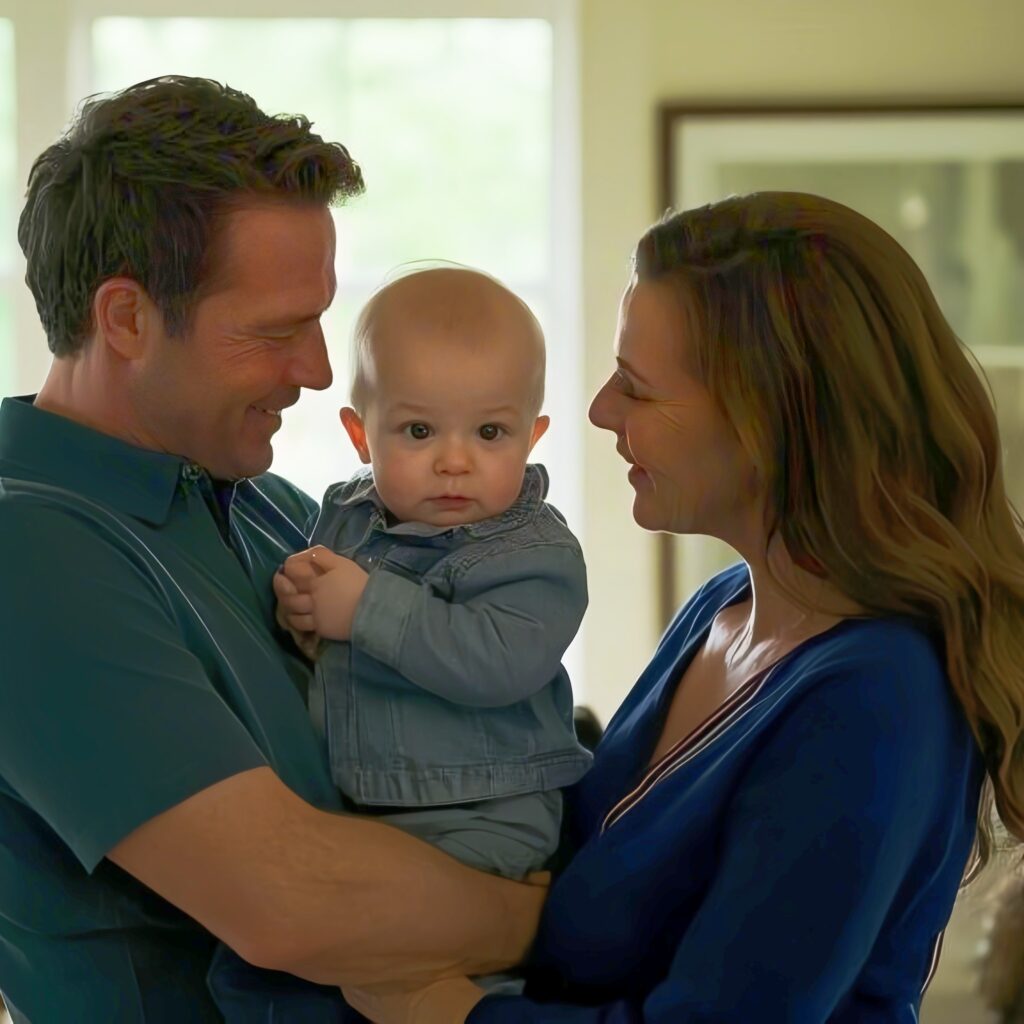
The City That Builds Families
Houston isn’t just a city known for oil, NASA, and incredible barbecue. It’s also becoming known for something far more personal: building families. Over the past decade, Houston has quietly emerged as one of America’s premier destinations for gestational surrogacy. But what makes this Southern city so special for such an intimate journey?
I’m Maria Rodriguez, a third-generation Houstonian and fertility counselor who’s worked with hundreds of families through their surrogacy journeys. Today, I want to share real stories from real Houston families—not the polished, perfect narratives you might read elsewhere, but the honest, messy, beautiful journeys that show why this city has become a beacon of hope for so many.
The Medical Ecosystem: More Than Just Hospitals
Sarah and Ben’s Story: When Science Met Southern Hospitality
Sarah, 42, is a petroleum engineer. Ben, 44, works in medical research. After six years of infertility, three miscarriages, and what Sarah calls “medical bankruptcy,” they were ready to give up.
“We’d tried everything,” Sarah tells me over coffee at Blacksmith in Montrose. “I was sitting in my car in the Texas Medical Center parking garage after yet another failed IVF, and I just started sobbing. Not delicate crying—full-on, can’t-breathe sobbing.”
That’s when a parking attendant—a grandmotherly woman named Lupe—knocked on her window. “Mija, you need a hug more than you need to pay for parking,” she said, and proceeded to give Sarah the most comforting hug of her life.
“This complete stranger held me for ten minutes in a parking garage,” Sarah remembers. “Then she said, ‘You know, my daughter couldn’t have babies either. She went to Dr. Kim at Houston Fertility. Maybe talk to him?'”
The Houston Difference: What Sarah discovered wasn’t just another doctor, but an entire ecosystem.
“We met with Dr. Kim, who spent two hours with us—not talking about success rates, but about our lives. He connected us with a surrogacy agency literally across the street. The genetic counselor was in the same building. The therapist who specialized in fertility trauma was three blocks away. The lawyer who handles surrogacy contracts? Her office was on the next floor.”
Ben adds: “In other cities, you’re running all over town. In Houston, especially in the Medical Center, everything is connected. Our gestational carrier, Jessica, did all her appointments in buildings connected by skybridges. We could have lunch together after appointments. It felt… human.”
Their outcome: Twin girls, born at Texas Children’s Pavilion for Women in 2021. Jessica, their gestational carrier, lives in Katy and comes to all the girls’ birthday parties. “She’s Aunt Jess to them,” Sarah says. “Her kids are like cousins to our girls.”
Diversity in Family Building: Houston’s True Strength
The Chen-Lopez Family: When Cultures Collide (Beautifully)
Michael Chen, 38, is a second-generation Chinese-American whose parents immigrated from Taiwan. Carlos Lopez, 39, is Mexican-American, born and raised in Houston’s East End. They met in law school and have been together for twelve years.
“When we decided to have kids, we had the ‘where’ conversation for months,” Michael explains. “Carlos wanted to stay in Houston—his whole family is here. I was worried about Texas’ reputation.”
What changed Michael’s mind was something unexpected: Houston’s Chinatown.
“We were having dinner in Bellaire Chinatown, and I noticed something,” Michael says. “There were rainbow flags in some restaurant windows. In a Chinese supermarket. In a neighborhood that’s supposed to be traditional.”
They started asking around discreetly. “We found out there’s a whole network of LGBTQ+ Asian families in Houston who’ve done surrogacy here. We were invited to a playgroup in Sugar Land—eight kids, all born through surrogacy, with parents from every background imaginable.”
Their journey took an interesting turn when they met their gestational carrier, Destiny.
“Destiny is a Black Baptist woman from Third Ward,” Carlos says. “We were nervous about the match—not because of race, but because of religion. We’re not religious, and we know some Christian communities have mixed feelings about gay parents.”
Destiny’s response surprised them. “She said, ‘My church teaches love. My pastor knows I’m doing this, and he prayed for all of us. My grandma makes tamales for your baby shower—she already decided.'”
Michael laughs. “Her grandmother did make tamales. And spring rolls. And taught my mother how to make proper tortillas. Our families basically adopted each other.”
Their son, Mateo Chen-Lopez, is now three. He speaks English, Spanish, and Mandarin phrases. He goes to Destiny’s church for their Christmas pageant and to the temple for Lunar New Year. “He has more grandparents than any kid I know,” Carlos says.
The Unexpected Support Networks
Military Families: When Service Meets Surrogacy
Houston is home to a massive military community, with multiple bases in the area. Captain Maya Johnson, 36, and her wife, Lieutenant Commander Taylor Smith, 37, are both stationed at Ellington Field.
“Military life and fertility treatment don’t mix well,” Maya says bluntly. “We’ve been stationed in three different states. Every move meant starting over with new doctors, new insurance battles, new everything.”
When Taylor was diagnosed with premature ovarian failure at 34, they assumed their parenting dreams were over. “Then we met another military couple at a base barbecue who’d had twins through surrogacy in Houston,” Taylor says. “They walked us through the whole thing.”
The military-specific challenges were significant. “We could be deployed. We could be transferred. Our gestational carrier, Amanda, is a military spouse—her husband could be deployed too,” Maya explains.
What they discovered was Houston’s unique understanding of military life.
“The agency we worked with had handled military families before. They built flexibility into our contract. Our lawyer knew about the Servicemembers Civil Relief Act. The hospital had procedures for if we got emergency orders.”
Amanda, their carrier, was married to an Air Force pilot. “She got it,” Taylor says. “When I had to go to training for two months during the pregnancy, Amanda sent me daily updates. When her husband was deployed, we had her over for dinner every week.”
Their daughter, Harper, was born while Maya was on a short deployment. “I got emergency leave thanks to my commander, who’d adopted kids himself and understood,” Maya says. “I landed at Hobby, went straight to the hospital, and held my daughter three hours after she was born.”
The base community surprised them. “We came home to a meal train that lasted six weeks. Other military families—many of whom had struggled with infertility—just showed up. No questions, just casseroles and help,” Taylor says, getting emotional.
Second-Chance Families: When Life Gives You Another Shot
The Martinez Family: After Loss Comes Hope
Sometimes, the surrogacy journey begins with unimaginable loss. Sofia and David Martinez lost their daughter, Elena, to sudden infant death syndrome in 2019. Sofia was 41 at the time, and the trauma left her unable to consider another pregnancy.
“We were broken,” Sofia says quietly. “Our doctor suggested surrogacy, but I couldn’t even think about it. The idea of another woman carrying our child felt… wrong, somehow.”
What changed was a support group at Houston Methodist. “It was for pregnancy loss, but there was a couple there who’d had a baby through surrogacy after losing their son. They didn’t push, they just… existed as proof that joy could come after pain.”
Meeting their carrier, Maria, was transformative. “Maria had lost a pregnancy at twenty weeks,” David explains. “She said, ‘I know this is different, but I know about loss. I know about wanting to honor a child’s memory by continuing to live and love.'”
The pregnancy was emotionally complex. “Every ultrasound was terrifying and beautiful,” Sofia says. “Maria understood. She’d text me before appointments: ‘Thinking of Elena with us today.'”
Their son, Diego, was born in 2021. “Maria asked if she could include Elena’s name in the bracelet she wore during delivery,” Sofia says, tearing up. “She wore a bracelet that said ‘Elena’s light guides us.'”
The Houston community surrounded them. Their priest at St. Anne’s Catholic Church blessed the surrogacy journey despite the Church’s official stance. Their neighbors in the Heights organized a “light the block” ceremony on Elena’s birthday. Diego’s nursery has photos of his big sister.
“He’ll know about her,” David says. “Maria made sure of that. She’s his godmother now.”
The Single Parents by Choice
Dr. Amina Hassan: Building a Village
Not all surrogacy journeys in Houston involve couples. Dr. Amina Hassan, 42, is a pediatric surgeon at Texas Children’s who decided to become a single mother by choice.
“As a Muslim woman, as a surgeon, as a single person—everywhere I looked, there were reasons not to do this,” Amina says. “But my mentor, Dr. Patel, had twins through surrogacy. She said, ‘Houston will surprise you.'”
She was right—but not in the ways Amina expected.
Finding an egg donor as a single Muslim woman presented unique challenges. “I wanted someone who shared some of my background. The agency found a donor whose family was from Lebanon, like mine. She was willing to be known to the child later—which matters in our culture.”
Her carrier, Brittany, was a young Christian woman from Conroe. “Our first meeting was awkward,” Amina admits. “I’m in scrubs, she’s in jeans. I’m drinking tea, she’s drinking sweet tea. But we found common ground: we both love Houston Astros baseball.”
Brittany’s family surprised Amina. “They invited me to church with them. I invited them to Eid celebrations. Brittany’s mom makes the best baklava I’ve ever had—and I’m Lebanese!”
The hospital experience as a single intended parent had its challenges. “Some nurses assumed I was the sister or friend. But Brittany would say, ‘No, she’s the mom. I’m just the oven.’ She made it clear at every appointment.”
Amina’s son, Zayn, is now two. “I have a village I never expected,” she says. “Brittany’s family, my mosque community, my medical colleagues—Zayn is being raised by all of Houston.”
Why Houston Works: The Practical Magic
After hearing these stories—and hundreds more—I’ve identified what makes Houston’s surrogacy community special:
1. The Medical Center isn’t just big—it’s integrated
Unlike other cities where fertility clinics, obstetric hospitals, and pediatric care are scattered, Houston’s Medical Center puts everything within walking distance. This isn’t just convenient—it’s psychologically reassuring. Families feel held by the physical proximity of care.
2. Diversity breeds understanding
Houston is the most diverse city in America. This means:
- Medical professionals who understand cultural nuances
- Support groups for every background
- Gestational carriers who reflect the city’s mosaic
- Legal professionals experienced with international families
3. Texas pragmatism
There’s a practical, problem-solving attitude here. Less “Can we do this?” and more “How do we make this work?” The legal system, while conservative in some areas, is remarkably straightforward about surrogacy because it’s seen as a practical solution to a medical problem.
4. Community warmth with boundaries
Houstonians are famously friendly, but they also respect privacy. Your business is your business—but if you need help, they’ll show up with food and kindness without prying.
5. The “second generation” effect
Houston now has teenagers who were born through surrogacy. Their parents are mentors. Their carriers are family friends. This creates a cycle of knowledge and support that new families can tap into.
The Challenges Are Real Too
It’s not all perfect. Houston’s surrogacy community faces real challenges:
Insurance complexities: Texas doesn’t mandate surrogacy coverage, so families often pay out-of-pocket or navigate complicated insurance arrangements.
Geographic sprawl: While the Medical Center is centralized, Houston is huge. Some carriers drive an hour or more for appointments.
Socioeconomic disparities: The cost means surrogacy is primarily accessible to middle and upper-class families, though some agencies are working on sliding scale and shared risk programs.
Political uncertainty: While Texas law is currently favorable, families worry about political shifts. Most work with lawyers to create “bulletproof” legal arrangements.
For Families Considering Houston
If you’re thinking about Houston for your surrogacy journey, here’s what these families want you to know:
From Sarah and Ben: “Don’t just look at success rates. Look at how the clinic handles setbacks. Our first transfer failed. Dr. Kim called us personally on a Sunday. That told us everything.”
From Michael and Carlos: “Find your people. Houston has communities within communities. We found ours through a LGBTQ+ Asian parents group. You’ll find yours.”
From Maya and Taylor: “If you’re military, be upfront. Houston gets it. The bases have resources you don’t know about until you ask.”
From Sofia and David: “Grief and hope can coexist. Find professionals who understand that. Houston has therapists who specialize in fertility after loss.”
From Dr. Hassan: “As a single parent, build your village before you need it. I had six friends on ‘baby duty’ rotation before Zayn was born. They’re his aunties and uncles.”
The Next Generation
What’s most inspiring is watching these children grow up in Houston. They’re just… kids. Kids with interesting stories, but mostly just kids.
I see them at the Houston Zoo, the Children’s Museum, the parks. I see:
- Sarah and Ben’s twins holding hands with “Aunt Jess’s” kids
- Mateo switching effortlessly between languages at the playground
- Military kids who’ve moved three times but still call Houston “home”
- Zayn being passed around a gathering of doctors, nurses, and his carrier’s family
They’re Houston’s children. Born of science, carried by generosity, raised by a village that spans this sprawling, diverse, wonderfully complicated city.
Houston’s Quiet Revolution
Houston isn’t shouting about being a surrogacy destination. It doesn’t need to. The families are doing that for it—quietly, in pediatrician’s offices and preschool classrooms and neighborhood parks.
They’re building a new definition of family here. One that includes gestational carriers as extended family. One that celebrates every path to parenthood. One that proves that in the right community—with the right medical care, legal protection, and human kindness—the dream of family is possible.
So if you find yourself considering surrogacy, and someone suggests Houston, listen. It might not be the first city that comes to mind. But for more and more families, it’s becoming the only city that felt like home for the most important journey of their lives.
Because in Houston, family isn’t just who you’re born to. It’s who shows up. And in this city, they show up with casseroles, legal expertise, medical brilliance, and open arms.
Welcome to Houston. Let’s build your family.