
When I first started researching surrogacy in Texas, I was focused on the big questions: Could I do this emotionally? Was my family ready? But as I got deeper into the process, a practical reality hit me—surrogate compensation isn’t a one-size-fits-all number across this massive state. Just like the cost of living changes from the Panhandle to the Gulf Coast, so does Texas surrogate pay. My own journey, and conversations with other surrogates across Texas, showed me that understanding these regional differences is crucial for setting realistic expectations and ensuring you feel fully valued for the incredible gift you’re giving.
1. Why Your Zip Code Matters in Your Surrogacy Journey
I remember naively thinking, “A base pay is a base pay, right?” Not exactly. The base compensation you see advertised is often just a starting point. Agencies and intended parents factor in regional cost of living because the expenses we face as surrogates differ. Think about it: my monthly travel costs for clinic appointments are vastly different if I live in Lubbock versus living right in the Medical Center in Houston. These logistical and economic realities directly influence compensation packages to make the journey fair and sustainable for surrogates, no matter where we call home.
“Talking to a surrogate friend in El Paso really opened my eyes. Her compensation structure had different allowances than mine in Dallas, not because her journey was less important, but because her real-world costs were different. It’s about equity, not equality.”
2. A Breakdown of Texas’s Major Surrogacy Hubs
Based on my experience and the shared stories within our community, Texas can generally be looked at in a few key regions when it comes to surrogacy. Here’s a simplified comparison of what I’ve learned:
| Region | Key Metro Areas | Common Compensation Factors | Personal Insight |
|---|---|---|---|
| Major Metro Hubs | Dallas-Fort Worth, Houston, Austin, San Antonio | Often have the highest base compensation due to cost of living. High concentration of clinics reduces travel needs for some, but heavy traffic can mean higher local mileage reimbursements. | Living in the DFW area, I had my pick of several top-rated clinics within an hour’s drive, which was a huge convenience. My compensation reflected the metro living costs. |
| Mid-Sized Cities & Suburbs | Plano, Frisco, The Woodlands, Round Rock, El Paso | Compensation is competitive, often slightly adjusted from the major hub baseline. Travel to a major clinic city is a common consideration, impacting monthly allowance structures. | A surrogate I know in a San Antonio suburb had a very solid package that included a clear monthly travel budget for trips to her clinic in Austin. |
| Rural & Remote Areas | West Texas, Panhandle, Deep East Texas | While base pay might be adjusted, these packages often include significant allowances for long-distance travel, overnight stays, and potentially lost wages for longer trips. The support structure is key. | My cousin, who was a surrogate in Amarillo, had her compensation meticulously planned to cover flights and hotels for her required monitoring in Dallas, ensuring she wasn’t out of pocket. |
3. Key Allowances Impacted by Your Location in Texas
Beyond base pay, the details in your contract’s allowance section are where regional differences really play out. When I reviewed my contract, I paid close attention to these line items:
- Travel and Mileage: This isn’t just about gas money. Is it a 20-mile or a 200-mile round trip to your monitoring appointments? Rates should account for wear and tear on your vehicle for longer commutes common in Texas.
- Lodging and Meals: If you’re traveling from Odessa to Dallas for transfers or key appointments, your contract should clearly cover hotel stays and a fair per diem. Don’t underestimate this!
- Childcare and Lost Wages: A day trip for an Austin surrogate might mean a few hours of childcare. For a Rio Grande Valley surrogate traveling to San Antonio, it might mean a full day or two. Your compensation should support your real-life responsibilities.
My biggest piece of advice? Advocate for transparency. Ask your agency how they calculate these variable costs for your specific town or region. A reputable agency will have clear, fair answers and will build a package that ensures you are supported, not stretched thin, by the practicalities of geography.
Understanding regional pay differences isn’t about comparing yourself to other surrogates; it’s about making sure your individual journey is logistically feasible and financially fair. Texas is a big, diverse place, and a surrogacy journey in El Paso will look different than one in Houston. The goal is a compensation package that honors your commitment and covers your unique circumstances, allowing you to focus on what truly matters—helping to create a family.
Texas Surrogate Pay: My Experience with Regional Variations
When I began my surrogacy journey here in Texas, one of the most practical questions I had was about compensation. I quickly learned that while Texas has clear laws supporting surrogacy, what you can earn isn’t a flat rate across the state. It really does vary depending on where you live and which agency or clinic you work with. Based on my own research and conversations with other surrogates across the state, here’s my breakdown of how pay often looks in our major metro areas.
1. The Big Picture: Base Compensation is Just the Start
Before we dive into cities, let me share a crucial insight: your base compensation is just one part of the financial package. Every reputable arrangement includes full reimbursement for all expenses—from maternity clothes and travel to medical co-pays and lost wages for appointments. There are also monthly allowances and potential bonuses for things like embryo transfer, carrying multiples, or a C-section. So when we talk “pay,” we’re really talking about the complete package, with base comp being the biggest variable.
“My advice? Always look at the entire benefits package, not just the monthly number. A slightly lower base with a fantastic health insurance plan and generous allowances can be worth far more in the long run.”
2. A City-by-City Look at Texas Surrogate Pay
These figures are based on 2023-2024 data from major agencies operating in Texas and my conversations in surrogate groups. They reflect typical first-time surrogate base compensation ranges. Experienced surrogates often command higher fees.
| Metro Area | Typical Base Compensation Range (First-Time Surrogate) | My Observations & Why It Varies |
|---|---|---|
| Dallas-Fort Worth | $55,000 – $70,000+ | DFW is a major hub for surrogacy, with several top-tier agencies and fertility clinics. The high demand from intended parents and competitive agency landscape often pushes compensation to the higher end of the scale here. |
| Houston | $50,000 – $68,000 | With the renowned Texas Medical Center, Houston attracts many intended parents. Pay is very competitive, though I’ve noticed a slightly wider range depending on the specific agency and whether you’re in the city core or a suburb. |
| Austin | $50,000 – $65,000 | Austin’s growing tech sector brings in intended parents, and the cost of living is considered. The vibe here is often more boutique, with some agencies offering very personalized matches, which can influence the package. |
| San Antonio | $45,000 – $60,000 | Generally, I’ve seen base comp start a bit lower here compared to DFW or Houston. However, the overall cost of living is also lower, and there are fantastic, well-established clinics making it a wonderful place to be a surrogate. |
| Other Texas Areas (Rural & Smaller Cities) | $40,000 – $55,000 | If you’re not near a major metro, your base may be lower. However, a key factor is your proximity to a clinic for monitoring. If you need to travel far for appointments, your travel allowance and reimbursement for lost wages become critically important parts of your negotiation. |
3. What Truly Impacts Your Pay More Than Your Zip Code
While location matters, in my experience, these factors were just as important, if not more so, in determining my final compensation package:
- Your Agency: Different agencies have different fee structures and attract different intended parents. Shop around!
- Your Experience: A proven, successful surrogate history significantly increases compensation.
- Your Health Profile: Being a healthy BMI, a non-smoker, and having a history of straightforward pregnancies makes you more in demand.
- Your Flexibility & Needs: Being open to carrying multiples (with added compensation) or having comprehensive insurance you can use affects the offer.
4. My Personal Advice on Navigating Regional Pay
When I was matching, I looked at agencies in both Houston and Dallas, even though I live closer to Austin. I asked very direct questions:
“How do you determine base compensation? Is it adjusted for my city’s cost of living?”
“If my monitoring clinic is 90 miles away, what is the detailed travel reimbursement plan?”
Don’t just focus on the top-line number. A lower base comp with a phenomenal, all-inclusive insurance policy might be financially safer than a higher base with a complicated insurance escrow account. Also, consider the agency’s support and the intended parents’ location—building a relationship is priceless, and sometimes a perfect match from another city is worth any small regional pay difference.
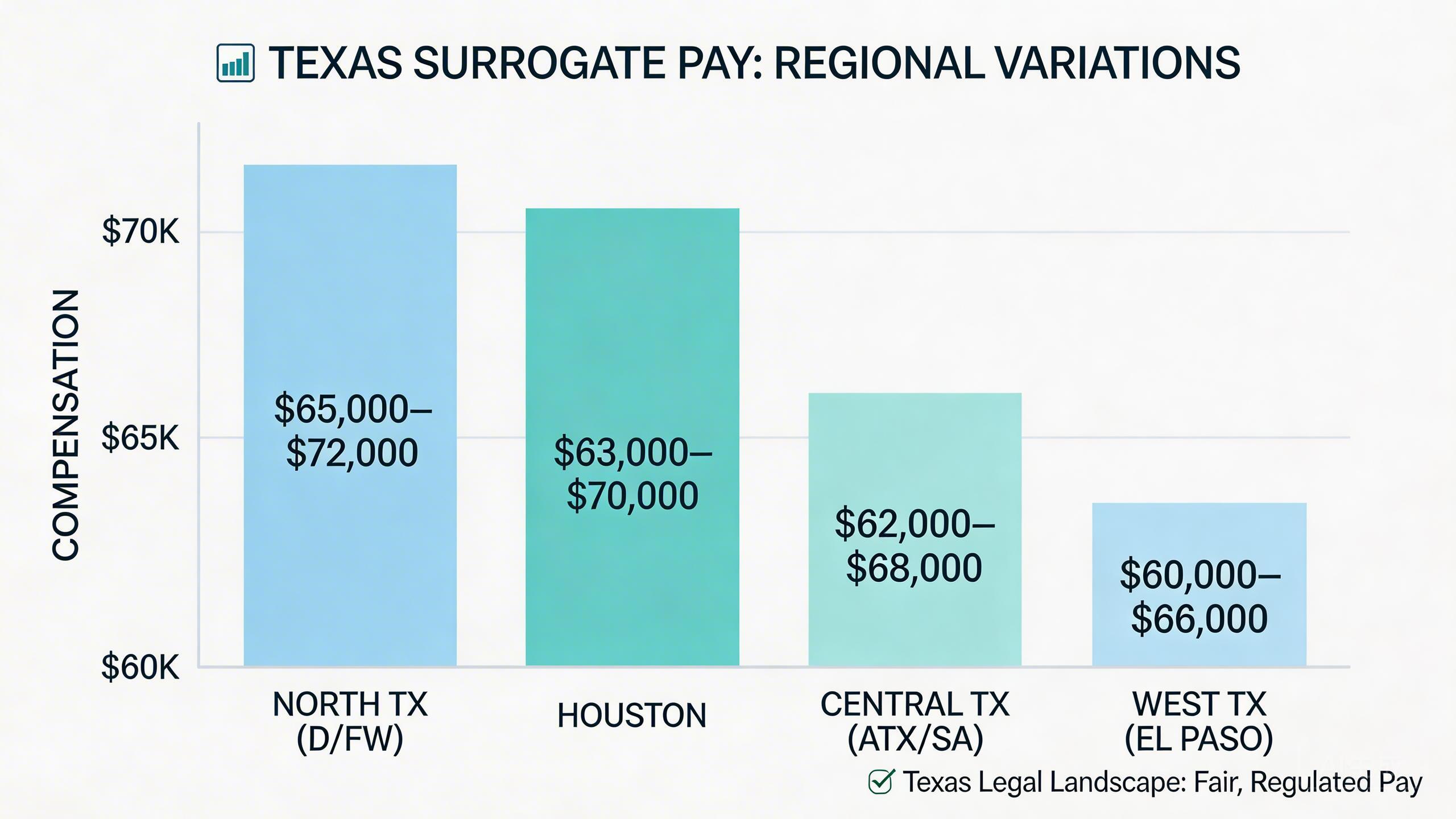
Ultimately, Texas surrogate pay is robust and fair across the board, thanks to our supportive legal landscape. By understanding the regional variations and focusing on the total package, you can feel confident and valued in your incredible journey, no matter which part of the Lone Star State you call home.
Texas Surrogate Pay: How Cost of Living Shapes Compensation Across Regions
When I first started researching Texas surrogate pay, I’ll admit I was a bit overwhelmed. I saw different numbers mentioned in forums and agency materials, and it wasn’t until I spoke with experienced surrogates that a key piece of the puzzle clicked into place: your base compensation is deeply tied to where you live in Texas. It’s not a one-size-fits-all number, and understanding these regional adjustments was crucial for me to feel confident and fairly compensated for this incredible journey.
1. Why Your ZIP Code Matters in Your Surrogate Pay
My agency explained it to me like this: the base compensation is just that—a base. It’s then adjusted for the cost of living in your specific region. This makes perfect sense when you think about it. The monthly budget for a family in bustling Dallas is fundamentally different than for one in a more rural part of the Panhandle. The compensation aims to acknowledge that reality and ensure the financial aspect of surrogacy is meaningful and supportive, no matter your hometown.
“Understanding the cost-of-living adjustment wasn’t about getting ‘more’—it was about feeling seen. The agency recognized that my daily expenses in Austin were a real factor, and building that into my compensation package showed a respect for my whole life, not just my pregnancy.”
2. A Look at Regional Variations Across the State
Based on my experience and conversations with other Texas surrogates, agencies typically categorize regions into tiers. While every agency has its own specific calculation, the general breakdown often looks something like this. Remember, these are illustrative ranges, and your specific offer will depend on your agency, your experience, and the details of your match.
| Region/Tier | Key Metro & Area Examples | Typical COL Adjustment Impact | My Personal Takeaway |
|---|---|---|---|
| Tier 1 (Highest COL) | Austin-Round Rock, Dallas-Fort Worth- Arlington, Houston-The Woodlands | Base compensation + highest adjustment percentage. Often an additional stipend for metro-area expenses. | Living near Austin, I had a clear “metro adjustment” on my base pay. It helped cover things like higher gas and childcare costs for appointments. |
| Tier 2 (Moderate COL) | San Antonio-New Braunfels, Midland, Odessa, some suburban areas of major metros | Base compensation + a moderate adjustment. Reflects a balance of urban and suburban costs. | A friend in San Antonio found her adjustment to be very fair, aligning well with the city’s growing but still manageable living costs. |
| Tier 3 (Standard/Lower COL) | Most rural areas, smaller cities like Lubbock, Amarillo, Laredo, Longview, and many East Texas & Panhandle communities | Often the standard base compensation with little to no additional COL adjustment. | I spoke with a wonderful surrogate from a small town near Abilene. Her base pay went very far locally, which was a huge benefit for her family. |
3. Questions I Asked My Agency (And You Should, Too)
To get complete clarity, I didn’t shy away from asking direct questions. Here’s what I found helpful:
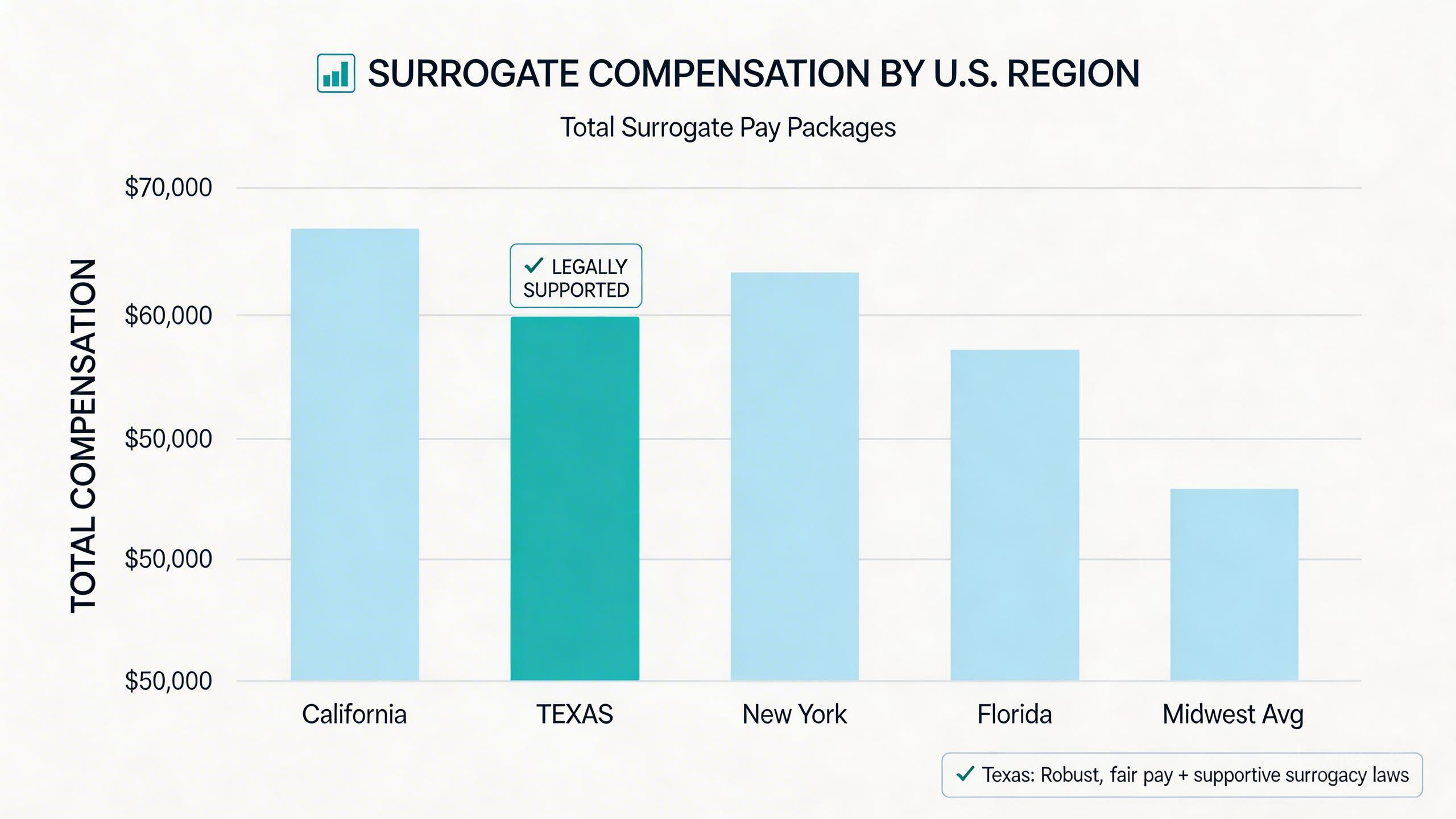
- “How exactly is my cost-of-living adjustment calculated?” Is it based on county, metro area, or a specific index?
- “Does this adjustment apply to all payments, or just the base compensation?” (e.g., monthly allowance, maternity clothes stipend).
- “If I move during the process, how would that affect my compensation?” It’s a rare scenario, but good to know.
- “Can you provide a clear, written breakdown of my total compensation package, showing the base and any adjustments?” A reputable agency will do this gladly.
4. My Final Piece of Advice: Look at the Whole Package
While the Texas surrogate pay adjusted for your region is a massive part of the financial picture, don’t forget to evaluate the entire package. A slightly lower base in a lower COL area might be completely offset by an agency that offers exceptional full-coverage insurance, generous housekeeping allowances, or lost wages compensation for your partner if they attend appointments. For me, the peace of mind that came with comprehensive, no-deductible medical coverage was as valuable as the monthly compensation.
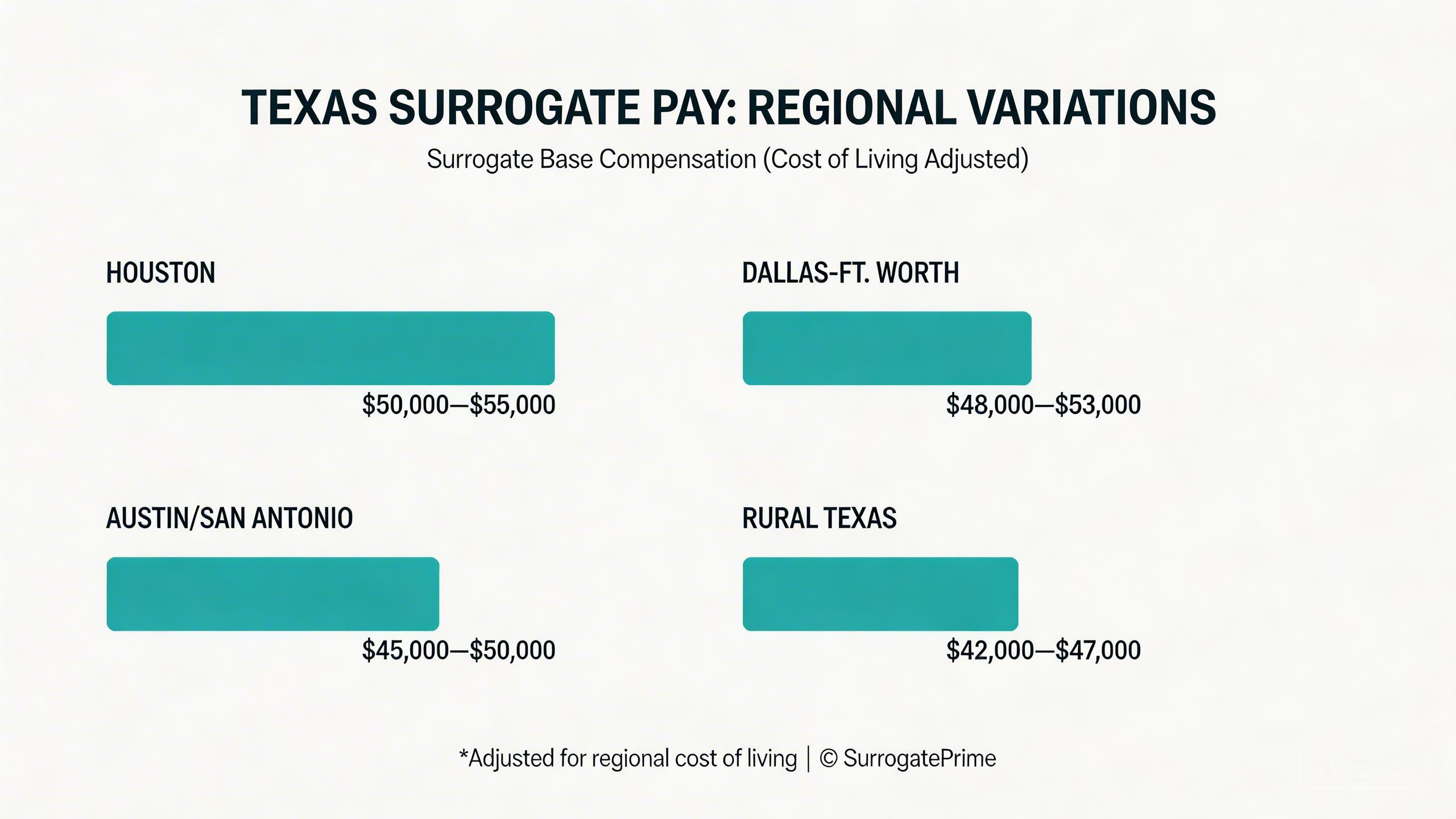
At the end of the day, you are offering an irreplaceable gift. Understanding how regional costs of living factor into your compensation is about ensuring you are empowered, respected, and able to focus on what truly matters: a healthy, happy journey for you and the intended parents you’re helping.
Urban vs. Rural Surrogate Compensation in Texas: My Real-World Experience
When I first began researching Texas surrogate pay, I assumed the compensation would be pretty standard across our huge state. Boy, was I wrong! My own journey took me from initial conversations in a small Panhandle town to eventually matching with intended parents in Houston. The differences in compensation, benefits, and even how the process feels between urban and rural areas are real and something every Texas surrogate should understand. Let me walk you through what I learned, not as an expert, but as a mom who’s been through it.
1. The Base Compensation: Where You Live Really Does Matter
Here’s the biggest surprise: your base compensation is often directly tied to the cost of living in your area, and sometimes even where your intended parents or agency are based. In my case, the initial offers I received while living in a rural area were noticeably different from those when I was considering a match with a Dallas or Austin-based family.
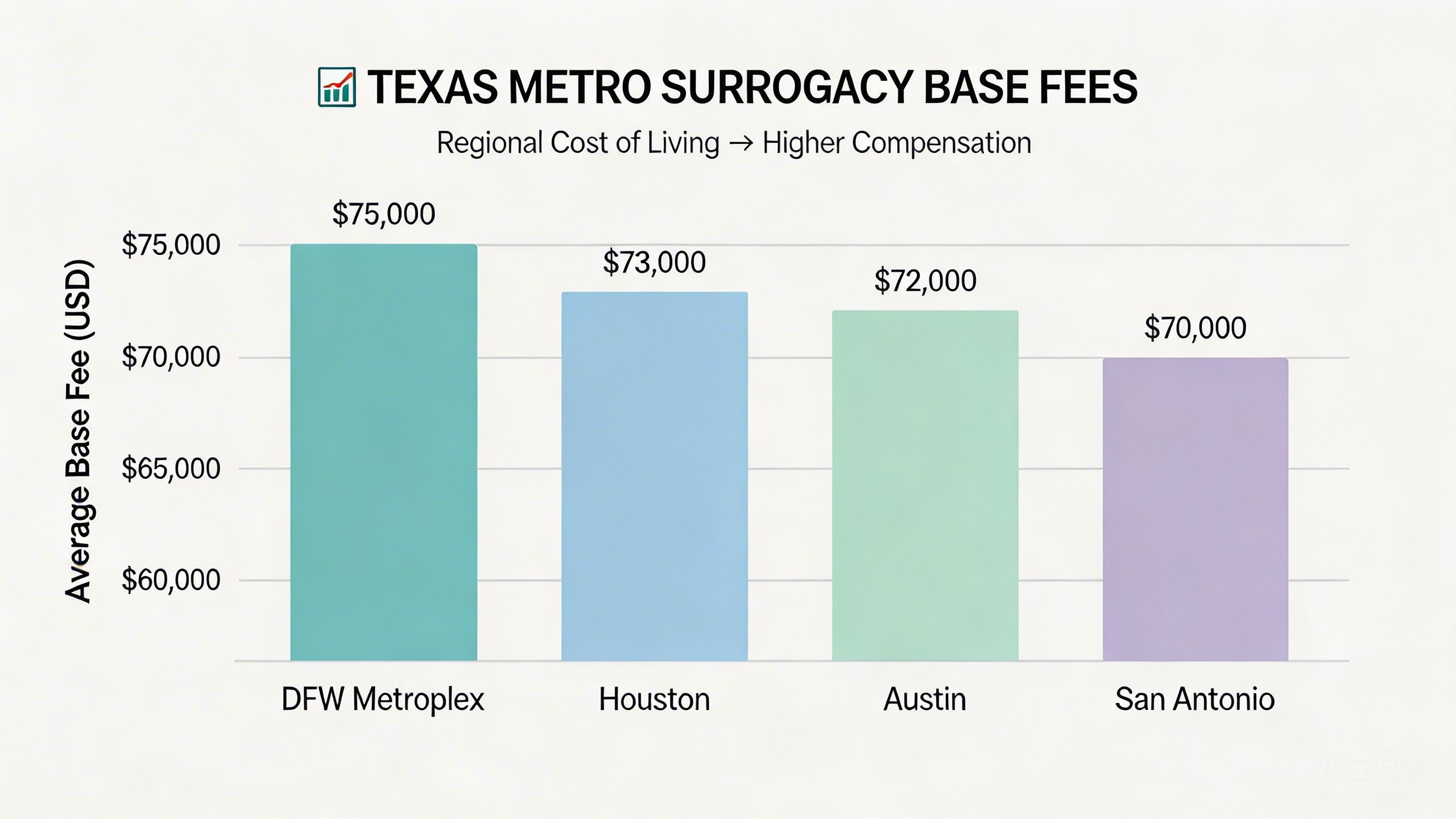
Typically, metropolitan areas like the DFW Metroplex, Houston, Austin, and San Antonio command higher base fees. This isn’t just about being “fancier”—it reflects the higher costs for everything from gas to groceries that we surrogates in or near cities face. Agencies also factor in the convenience for monitoring appointments. In a major city, I might have a dozen clinics within a 30-minute drive. In a rural area, a surrogate might be driving two hours each way for monitoring, and that time and expense is valued.
| Region Type | Example Areas | Influencing Factors | Impact on Base Pay |
|---|---|---|---|
| Major Urban | Dallas, Houston, Austin, San Antonio | High cost of living, abundant clinic options, higher agency concentration. | Tends to be on the higher end of the scale, often $45,000+ for a first-time surrogate. |
| Mid-Size & Suburban | El Paso, Lubbock, Amarillo, The Woodlands | Moderate cost of living, may require some travel for specialized appointments. | Often in the moderate range, very competitive with state averages. |
| Rural | Panhandle towns, East Texas communities, South Plains areas | Lower cost of living, significant travel for monitoring and transfer, fewer local surrogates. | Can vary widely. May be slightly lower base, but travel allowances are absolutely critical and often more generous. |
*These are illustrative ranges based on my research and community discussions. Your specific compensation will depend on your agency, experience, and the details of your match.
“My advice? Don’t just look at the base number. My compensation package in West Texas included a much larger monthly travel allowance than my friend in Houston got. When I added it all up, our total compensation was surprisingly similar. It’s all in the details.”
2. The Hidden Factor: Travel and Logistics
This was the make-or-break difference for me. In a rural area, you’re not just compensated for your time as a surrogate; you’re compensated for being a long-distance traveler. Your package should include generous allowances for:
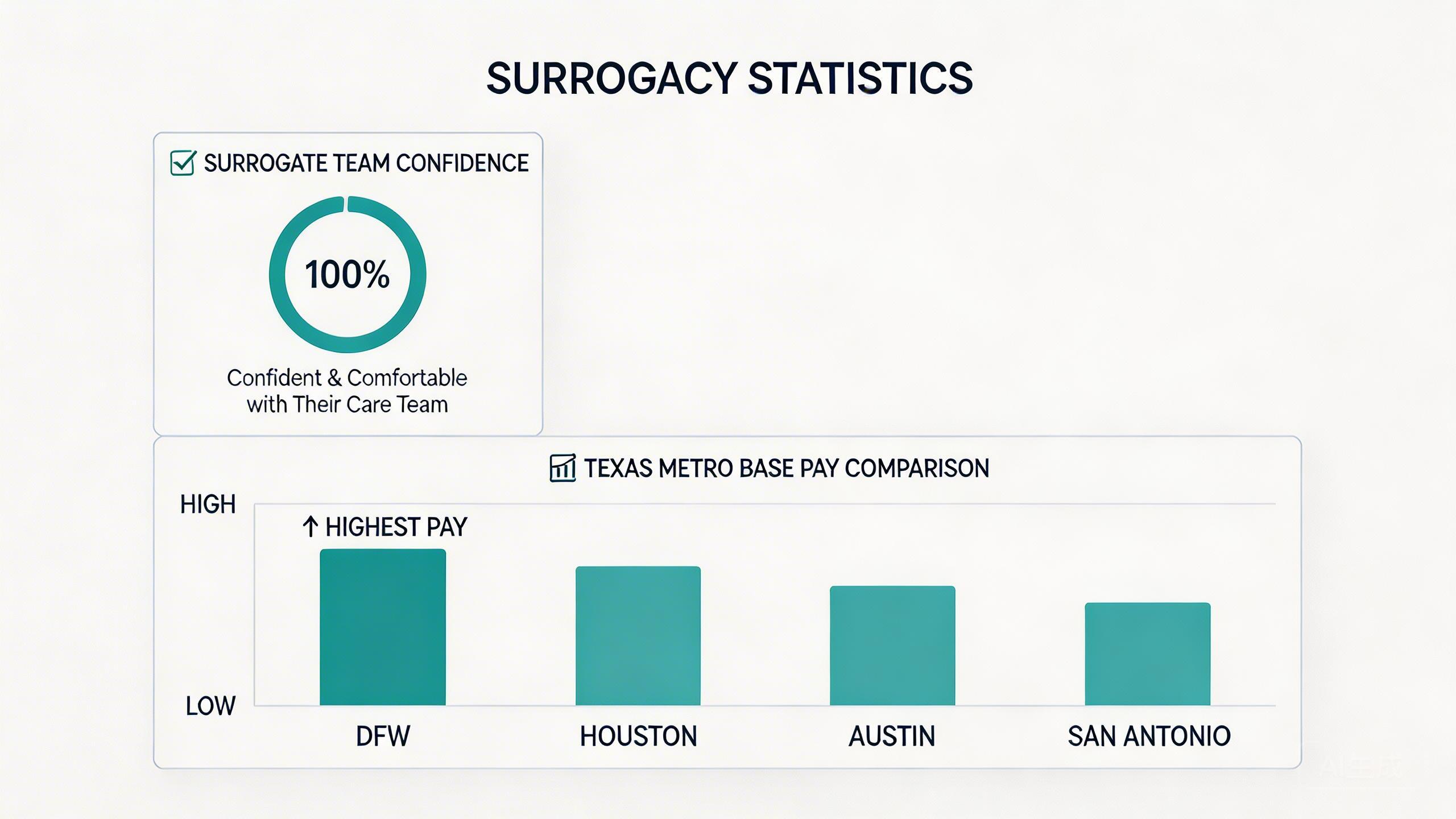
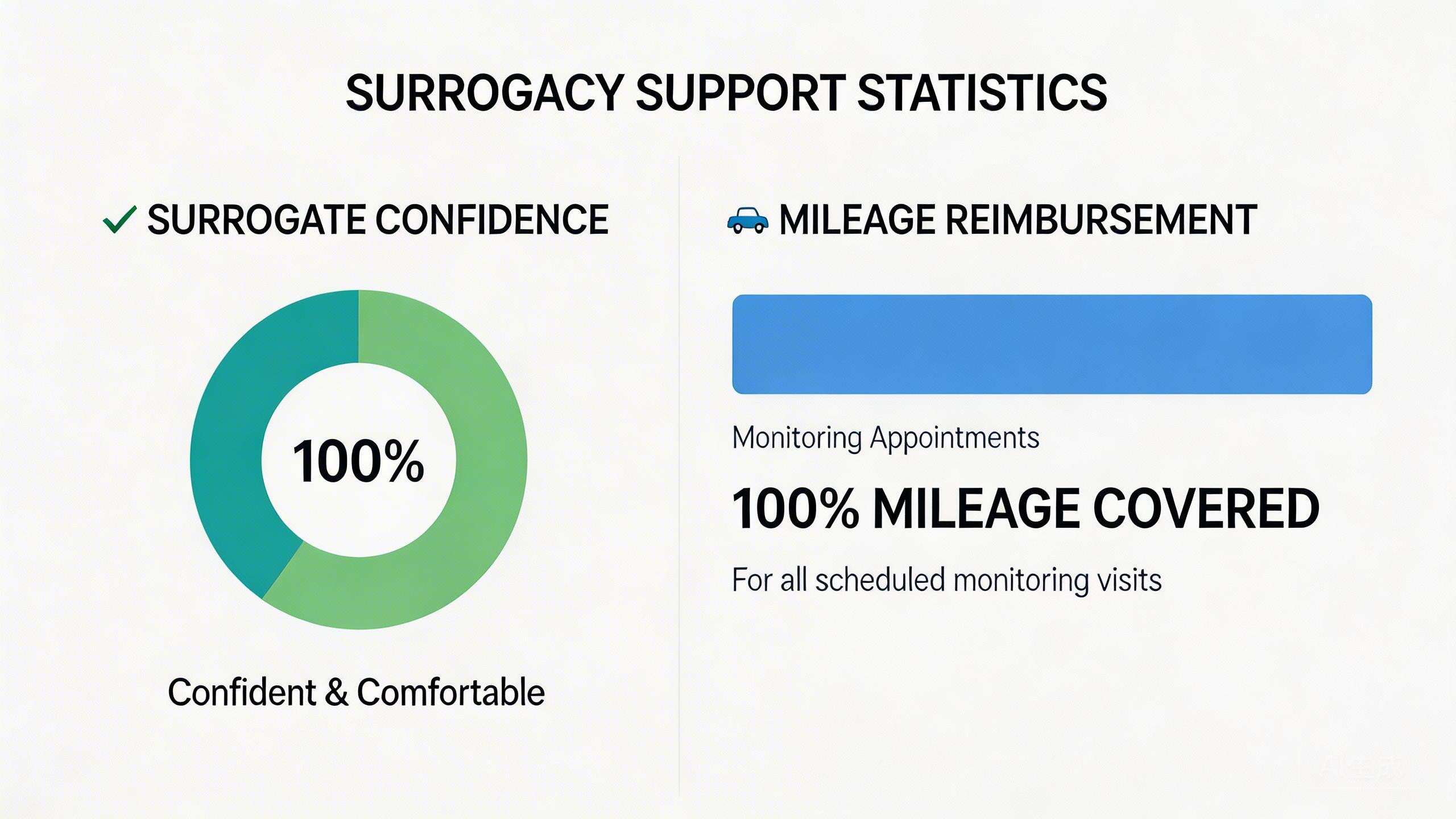
- Mileage: For every monitoring appointment (and there are many!).
- Lodging & Meals: For the embryo transfer and any crucial appointments that require an overnight stay in a city.
- Childcare & Lost Wages: If you have to take a full day off work and arrange care for your kids to travel for an appointment, these reimbursements are vital.
When I reviewed contracts, I paid obsessive attention to the travel section. A good agency will build a package that makes the logistical hurdles of rural surrogacy financially neutral for you. If the travel allowances seem skimpy, that’s a red flag.
3. Access to Care and Community
This isn’t directly about pay, but it affects your entire experience. In Houston, I had my pick of top-rated reproductive endocrinologists and could easily attend surrogate support group meetups. In a rural setting, your community might be online, and your local OB might never have managed a surrogate pregnancy before.
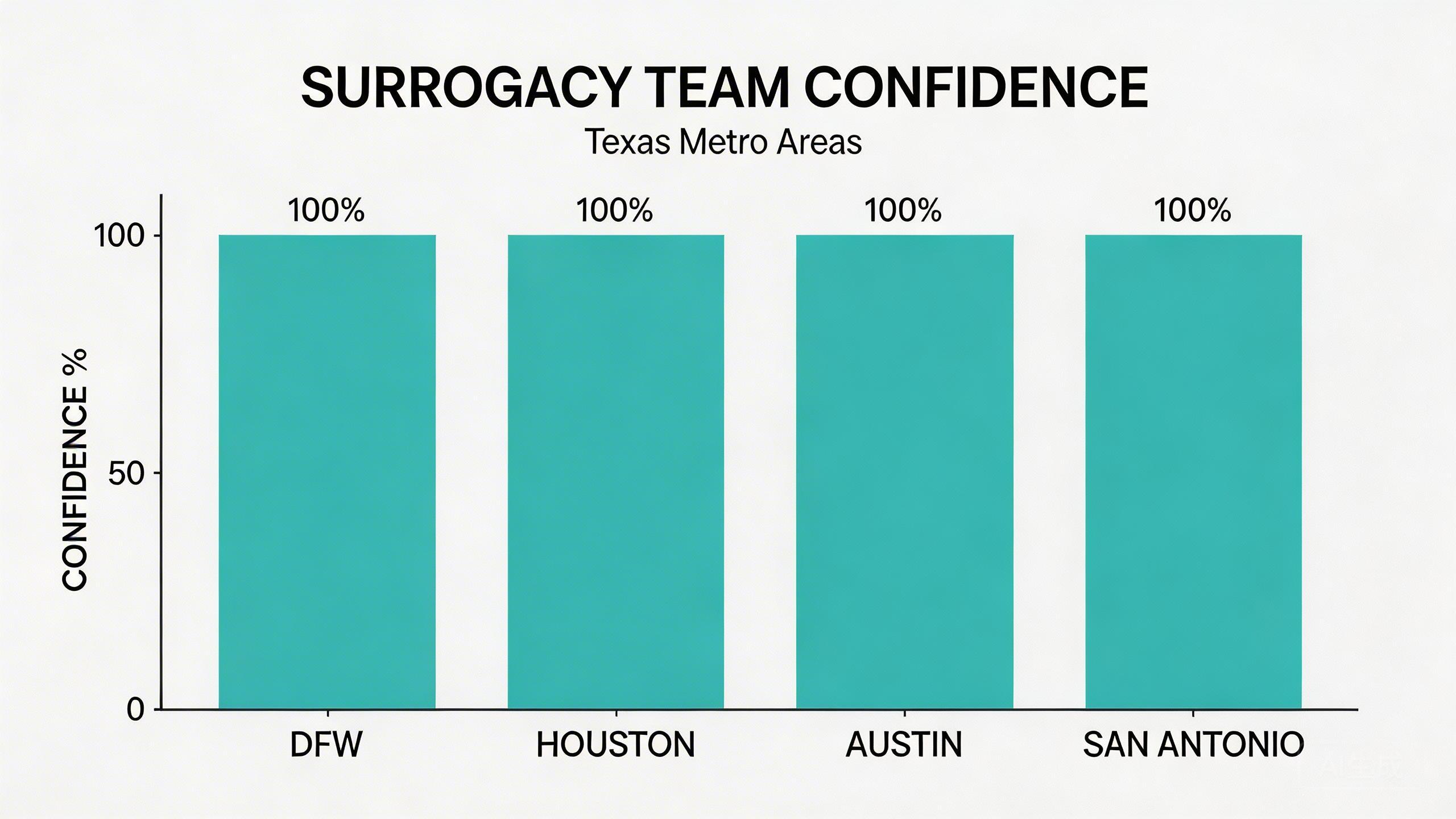
Some agencies serving rural areas build relationships with specific clinics in nearby cities to streamline care. Ask about this! Also, don’t underestimate the value of a supportive local medical team. I made sure my chosen agency had experience working with providers in less populous areas and was willing to educate my local OB if needed.
4. My Bottom-Line Advice for Comparing Offers
So, how do you navigate this? Here’s what I did:
- Calculate the Total Package: Add up the base pay, all monthly allowances (housekeeping, maternity clothes, travel), and the milestone payments. This is your true “total compensation.”
- Be Brutally Honest About Logistics: Map out the drive to the nearest monitoring clinic. How much will gas, wear-and-tear, and time really cost you? Does the allowance cover it?
- Ask About Agency Flexibility: Some agencies primarily work in urban hubs and aren’t as adept at structuring packages for rural surrogates. Look for one that demonstrates experience across all of Texas.
- Trust Your Gut on Value: The compensation should not only cover your expenses and effort but also feel fair and respectful for the incredible gift you’re giving. Whether you’re in Lubbock or downtown Fort Worth, you deserve to feel valued and supported.
At the end of the day, Texas surrogate pay is as diverse as our landscape. What matters most is finding a match and an agency that structures a package that honors your unique circumstances—making your journey as smooth and positive as possible, no matter what your zip code is.
Texas Surrogate Pay: Agency Fee Structures by Region
When I started my surrogacy journey here in Texas, one of the biggest surprises was how much agency fees and support structures could vary depending on where in the state the agency was based, or where they primarily matched surrogates. It’s not just about the base compensation; it’s about the whole package and how the agency’s own fees shape your experience. Let me break down what I learned, both from my own research and from talking to other surrogates across our huge state.
1. The Major Metro Agency Model: DFW, Houston, Austin
In the big metro hubs—Dallas-Fort Worth, Houston, and Austin—you’ll find a high concentration of national and established local agencies. Their fee structures often reflect higher operational costs, but also, in my experience, more comprehensive services. I worked with an agency in DFW, and their fees to the intended parents covered a lot for me:
- Dedicated, in-person support: I had a case manager and a social worker I could meet for coffee if I needed to. That face-to-face connection was invaluable during screening and the emotional moments.
- Local legal coordination: They had strong relationships with Texas-based reproductive law attorneys who know our specific state statutes inside and out.
- Concierge medical coordination: They handled all scheduling and billing issues with the fertility clinic, which was a massive headache off my plate.
“Choosing an agency in Houston meant my monthly support groups were a 20-minute drive away, not a Zoom call. For me, that community was worth the agency’s premium. The fees they charge create a full-service, hand-held experience.”
The trade-off? These agencies can be selective. Their fees are higher, so they often look for surrogates with the most straightforward profiles (healthy BMI, proven pregnancy history, stable lifestyle) to ensure a smooth process for their paying clients—the intended parents.
2. Statewide & “Virtual-First” Agencies
I also interviewed with a few agencies based in Texas but that operate virtually across the entire state. They might have a small home office in San Antonio or even a smaller city, but their surrogate support is largely remote. Their fee structure is often different:
- Lower overhead: With less physical office space and regional staff, their fees to intended parents can be slightly lower, which can make them attractive to some families.
- Flexibility: They are typically very adept at matching surrogates in West Texas, the Panhandle, or the Gulf Coast with clinics and IPs anywhere.
- Potential for less personalized touch: Everything is done via phone, email, and video chat. While my friend in Lubbock loved this flexibility, it’s something to consider if you thrive on in-person interaction.
The key question I asked these agencies was: “If I have an emergency at 8 PM, who do I call, and where are they located?” Make sure their support system is robust, even if it’s not local.
3. Understanding What the Agency Fee Covers FOR YOU
This was my biggest “aha!” moment. The agency fee isn’t your compensation; it’s what the intended parents pay the agency for services. But its structure directly impacts you. Here’s a comparison I wish I had seen:
| Service Aspect | Typical in Major Metro Agencies | Typical in Statewide/Virtual Agencies |
|---|---|---|
| Initial Screening & Matching | Often includes in-person meetings, thorough background checks, and detailed profile creation. | May be conducted entirely remotely; can be faster but feel less personal. |
| Ongoing Support | Regular in-person or local check-ins, organized local surrogate meet-ups. | Primarily virtual check-ins; support groups via Zoom; may feel more independent. |
| Escrow Management | Usually includes a dedicated, professional escrow company. Fees for this are typically covered in the agency’s overall fee. | Also uses professional escrow, but sometimes surrogates need to be more proactive in understanding the payment schedule. |
| Legal Coordination | Agency has pre-vetted Texas lawyers and manages the entire contract process closely. | Agency provides referrals and guidance, but you may need to be more hands-on with your attorney communication. |
4. My Practical Advice for Evaluating Agencies in Texas
So, how do you navigate this? Here’s what I did and what I recommend:
- Interview Multiple Agencies: Talk to at least one from a major city and one statewide operator. Feel the difference in their approach.
- Ask Directly About Fees: You have a right to understand how they operate. Ask: “How do you structure your fees to intended parents? Does that change the level of support I receive?”
- Request References from Your Region: If you live in El Paso, ask the DFW agency if they have a current surrogate in West Texas you can speak to. This will reveal how they handle distance.
- Trust Your Gut on the “Fit”: The agency is your advocate and guide for 18+ months. Whether they’re in Plano or operate virtually from Corpus Christi, you need to feel 100% confident and comfortable with their team.
Remember, your base compensation and benefits are negotiated separately in your contract and are protected in escrow, regardless of the agency’s fee. But the agency’s structure sets the stage for your entire journey’s support system. In a state as vast and diverse as Texas, finding the right regional fit is just as important as the numbers on paper.
How Location in Texas Affects My Additional Benefits and Perks
When I first started researching Texas surrogate pay, I, like many, focused on the base compensation. But what I’ve learned through my own journey is that where in Texas you live can significantly shape the entire experience, especially when it comes to the extra benefits and perks that support you along the way. These aren’t just nice-to-haves; they’re practical considerations that impact your family’s logistics, your comfort, and your overall well-being during the pregnancy.
1. The Metro vs. Rural Divide: Access and Allowances
Living in the Dallas-Fort Worth metroplex, my experience with additional benefits was heavily influenced by easy access. My agency and clinic were within a reasonable drive, which meant my travel allowance for monitoring appointments and transfers was more than sufficient—often it just covered gas and parking. I’ve spoken with surrogate friends in more rural areas, like the Panhandle or deep East Texas, and their situation is different. Their contracts often included more substantial travel budgets, sometimes even covering overnight hotel stays for required appointments, because a “quick trip” to a monitoring clinic in Houston or Austin could be a full-day affair.
“My advice? Map out the distance to your intended clinic and any required monitoring locations during matching. Don’t just assume the standard travel stipend will cover it. We negotiated a higher mileage rate because of my location, and it relieved so much financial stress.”
2. Maternity Clothing & Seasonal Needs
This might seem small, but it’s so practical! My maternity clothing allowance had to work for Texas weather. Carrying through a humid Houston summer meant budgeting for lightweight, breathable fabrics. A surrogate in Amarillo would need a wardrobe accommodating colder winters. Furthermore, in cities with a more formal or specific social scene (think certain parts of Dallas or Austin), a surrogate might value a portion of her allowance going toward a few dressier options. It’s worth thinking about your lifestyle and climate when discussing this perk.
3. Childcare and Household Help: Urban Convenience vs. Local Networks
One of the most valuable perks for me was the childcare allowance for appointment days and postpartum recovery. In my suburban area, I had easy access to drop-in daycare centers and a network of babysitters. For surrogates in smaller towns, where formal drop-in options might be scarce, this benefit might be structured differently. It could mean a higher hourly rate for a trusted local sitter or flexibility to use the funds for family help. The key is to ensure the benefit is functional for your specific support system.
Comparing Regional Considerations for Texas Surrogates
| Benefit/Perk | Major Metro (DFW, Houston, Austin, SA) | Mid-Size Cities & Suburbs | Rural & Remote Areas |
|---|---|---|---|
| Travel for Appointments | Often lower mileage/parking costs; high clinic density. | Moderate travel; may involve toll roads. | Substantial travel; may require overnight stays; a key negotiation point. |
| Lost Wages Coverage | More critical for hourly jobs with strict attendance; higher potential wage replacement. | Important for both hourly and salaried positions. | Crucial if self-employed or in agriculture; structure may vary. |
| Childcare Solutions | Many formal options (drop-in centers, apps); easier to use. | Mix of formal centers and informal networks. | Relies heavily on family/informal networks; allowance should reflect local sitter rates. |
| Specialist Access | Easy access to MFMs, therapists, etc.; often included in standard care. | May require some travel to metro for specialists. | Travel for any specialist care is expected and must be budgeted. |
4. The Intended Parents’ Location Factor
This was a big one for me. My intended parents (IPs) lived out-of-state. Because of this, our contract included clear terms for their travel to attend key appointments and the birth. If your IPs are within Texas—say, you’re in San Antonio and they’re in Corpus Christi—the dynamic changes. They might attend more routine appointments, which can affect the support you feel. It also might mean in-person postpartum support is more feasible. This isn’t a direct monetary perk, but the emotional and practical support of having your IPs nearby can be an incredible benefit.
5. My Top Advice for Evaluating Location-Based Perks
Looking back, here’s what I wish I’d known to focus on:
- Be Hyper-Specific in Your Contract: Don’t let “standard travel reimbursement” slide. Define the mileage rate, parking, hotel qualifications, and meal per-diems based on your actual likely travel.
- Consider Your Support Circle: If you live far from family help, a stronger postpartum doula or housekeeping allowance might be more valuable than a slightly higher base pay.
- Ask Other Surrogates in Your Region: I connected with a surrogate a few counties over through a Texas surrogacy group. Her insights on what benefits were truly useful in our area were priceless during my contract review.
Ultimately, Texas surrogate pay is more than a single number. It’s a package designed to support your unique journey. By understanding how your zip code influences the practicalities of that support, you can advocate for a compensation plan that truly works for your life, your family, and your well-being throughout this amazing process.
Negotiating Pay Based on Your Texas Location
When I first started my surrogacy journey, I naively thought the base compensation would be the same no matter where in Texas I lived. Boy, was I wrong! What I learned—through my own experience and countless conversations with other surrogates across the state—is that your zip code can play a significant role in your overall compensation package. Here’s my take on navigating those regional variations, from someone who’s been through it.
1. Understanding the “Why” Behind Location-Based Pay
It’s not just agencies being arbitrary. The main factors come down to cost of living and local demand. Intended parents, often through their agency, may offer adjusted compensation to account for the higher expenses in major metropolitan areas. It also recognizes the logistical reality: appointments, monitoring, and the birth itself are centered around your community. My advice? Don’t see it as unfair, but as a practical starting point for a conversation about what your unique journey is worth.
“Living in Austin, my agency was upfront about a metropolitan area adjustment. It wasn’t a huge leap, but it acknowledged that my daily costs were higher than in some rural communities. That transparency built trust from the start.”
2. The Texas Metro vs. Non-Metro Reality
Based on my research and peer discussions, here’s a general picture of how base compensation often breaks down. Remember, these are starting points, and your individual circumstances, experience, and the specific intended parents’ agreement will shape the final number.
| Region Type | Example Cities/Areas | General Compensation Context | My Personal Insight |
|---|---|---|---|
| Major Metropolitan Hubs | Dallas-Fort Worth, Houston, Austin, San Antonio | Typically commands the highest base compensation ranges. High demand from both local and out-of-state intended parents, and highest cost of living. | In DFW, I found multiple clinics and agencies competing, which gave me more leverage to find a package that felt right. |
| Growing Urban & Suburban Areas | Plano, Frisco, The Woodlands, Round Rock, Midland/Odessa | Strong compensation, often slightly below or on par with the core metros. Good access to monitoring clinics influences this. | Living near a major city but not in it, I made sure to clarify travel reimbursements for appointments downtown. |
| Rural & Remote Areas | Panhandle, Deep East Texas, Far West Texas | Base may start lower, but travel and mileage reimbursements become critical negotiation points. Your willingness to travel is a big factor. | A surrogate friend in the Panhandle negotiated a generous monthly travel stipend, which made her overall package very competitive. |
3. Key Compensation Elements to Negotiate (Beyond Base Pay)
This is where you can truly tailor your package to your location. The base is one number, but the benefits and allowances are where you account for your real-life logistics.
- Monthly Allowances: Always negotiate this. For city dwellers, a higher maternity clothing allowance might make sense. For everyone, a housekeeping allowance late in pregnancy is a lifesaver.
- Travel & Mileage: This is the BIG one for surrogates outside major cities. How far is your monitoring clinic? Negotiate a solid per-mile rate and a clear policy for overnight stays if needed.
- Lost Wage Coverage: Consider your commute and job. If bed rest is ordered, will the coverage account for your specific income? Be detailed here.
- Childcare & Housekeeping: Essential for all, but the going rates in McAllen versus Lubbock differ. Ask for allowances that reflect your local costs.
4. My Actionable Advice for the Negotiation Conversation
Walking into my compensation discussion, I was nervous. Here’s what worked for me:
- Do Your Homework: Before you talk numbers, research typical Texas surrogate pay ranges. Talk to your agency consultant—they should be your guide on what’s standard and what’s possible for your area.
- Document Your Logistics: Map out the distance to your likely clinic and hospital. Calculate estimated mileage for 20+ appointments. Having concrete numbers gives you power.
- Focus on “Total Compensation”: Look at the whole package—base pay, allowances, benefits, and reimbursements. A slightly lower base with exceptional benefits and travel coverage might be better for your situation.
- Use Your Location as an Asset: If you live in an area with few surrogates, your accessibility is valuable. If you live in a hub with top-tier clinics, that’s also a plus. Know your worth.
- Work with a Texas-Savvy Professional: Ensure your agency and lawyer understand the nuances across our huge state. Their experience will prevent you from leaving money on the table.
At the end of the day, your compensation should feel fair and should account for the beautiful, diverse, and sometimes sprawling landscape of Texas that we call home. By understanding the regional factors and advocating for the details that matter to your life, you can secure a package that honors your incredible gift and supports your journey with confidence.
Case Studies: My Look at Surrogate Pay in Different Texas Cities
When I was researching becoming a surrogate, one of my biggest questions was, “What can I realistically expect for compensation here in Texas?” I quickly learned that while Texas is a surrogacy-friendly state, the pay isn’t a flat rate across the board. It can vary quite a bit depending on where you live. Talking to other surrogates and my own agency, I gathered some real-world insights. Here’s a breakdown of what I discovered about Texas surrogate pay in different regions, from my perspective.
1. The Major Metro Hubs: Dallas-Fort Worth & Houston
Living in the Dallas area myself, I found that the major metropolitan areas typically offer the highest base compensation. This isn’t just random; it’s often tied to the higher cost of living. Agencies here are plentiful, and intended parents (both domestic and international) often work with these agencies, creating a competitive environment.
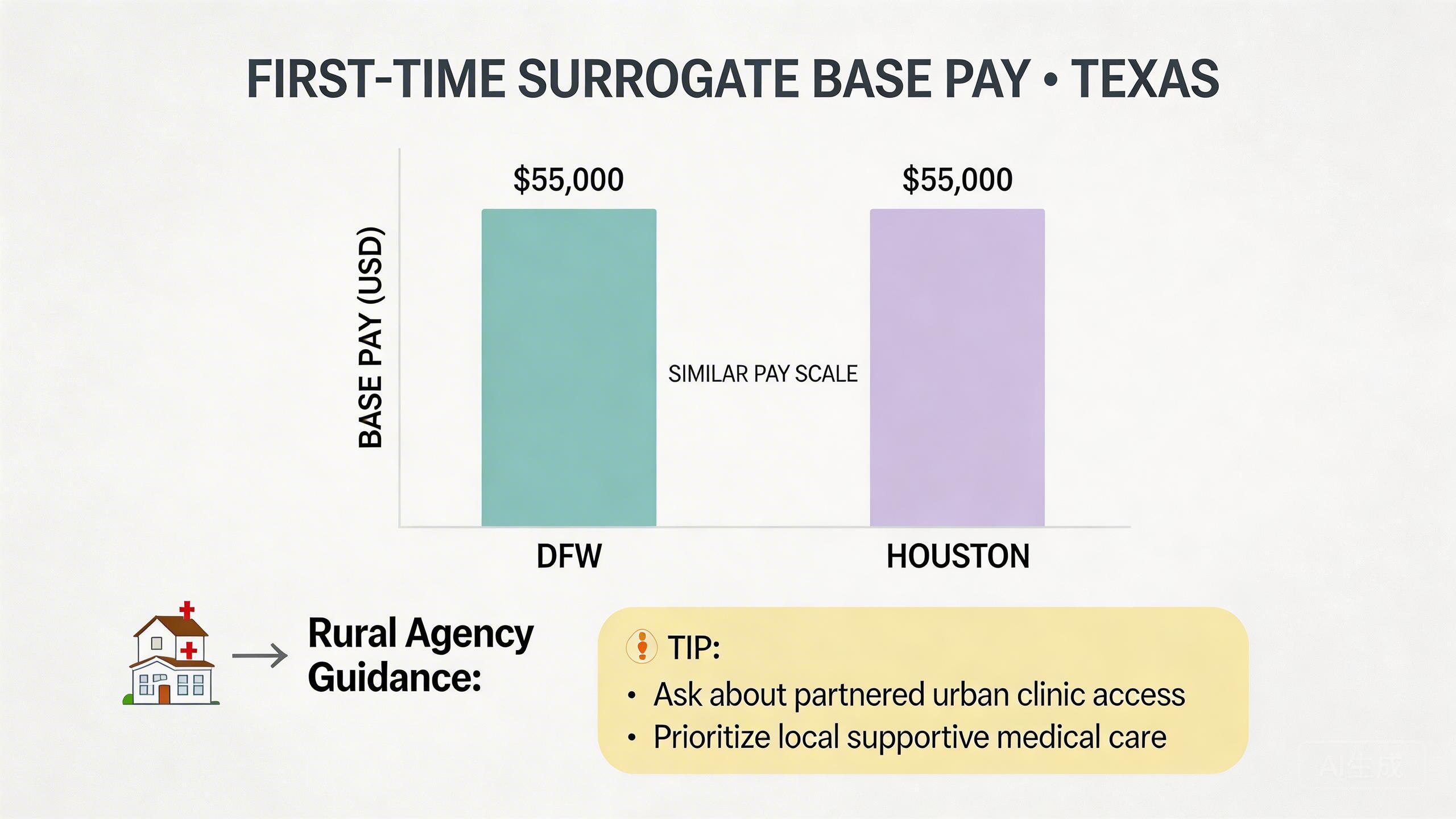
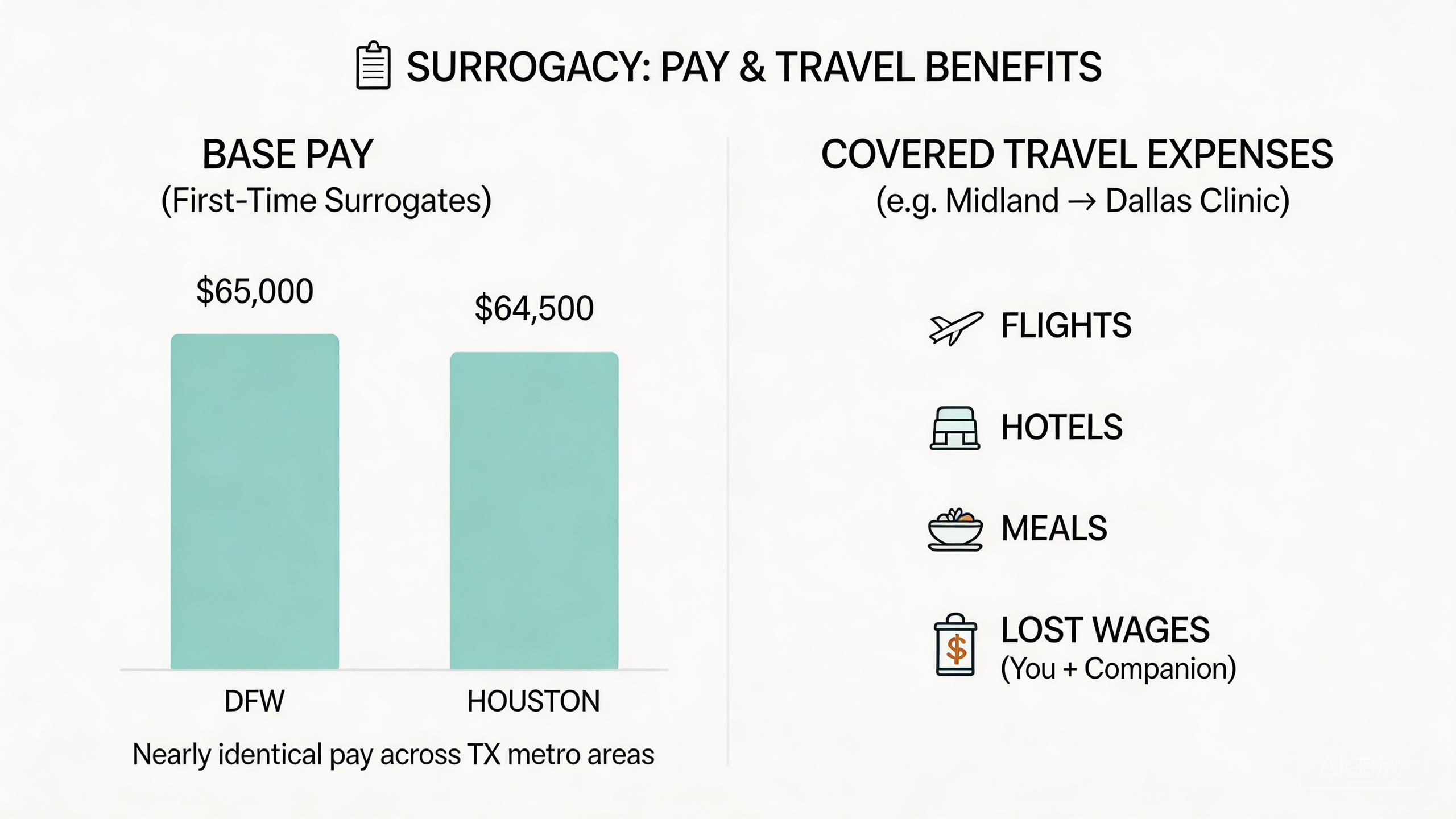
My base pay as a first-time surrogate in DFW was on the higher end of the scale. I’ve spoken to surrogates in Houston who reported very similar numbers. The key here is that these cities have a deep pool of experienced reproductive endocrinologists, legal professionals, and large agencies, which streamlines the process.
“My compensation in Houston wasn’t just about the base pay. The intended parents also provided a very generous monthly allowance for expenses, which in a city where you’re driving everywhere, really mattered. It showed they understood the realities of my daily life.” – Sarah, Houston Surrogate
2. Austin & San Antonio: Strong Markets with a Slight Nuance
Austin and San Antonio also have robust surrogacy communities. Pay here is very competitive, often just a step below or on par with Dallas and Houston. I’ve noticed that Austin, with its unique tech and cultural scene, sometimes attracts intended parents who are particularly mindful of a surrogate’s overall well-being, which can be reflected in comprehensive benefits packages beyond just the base pay.
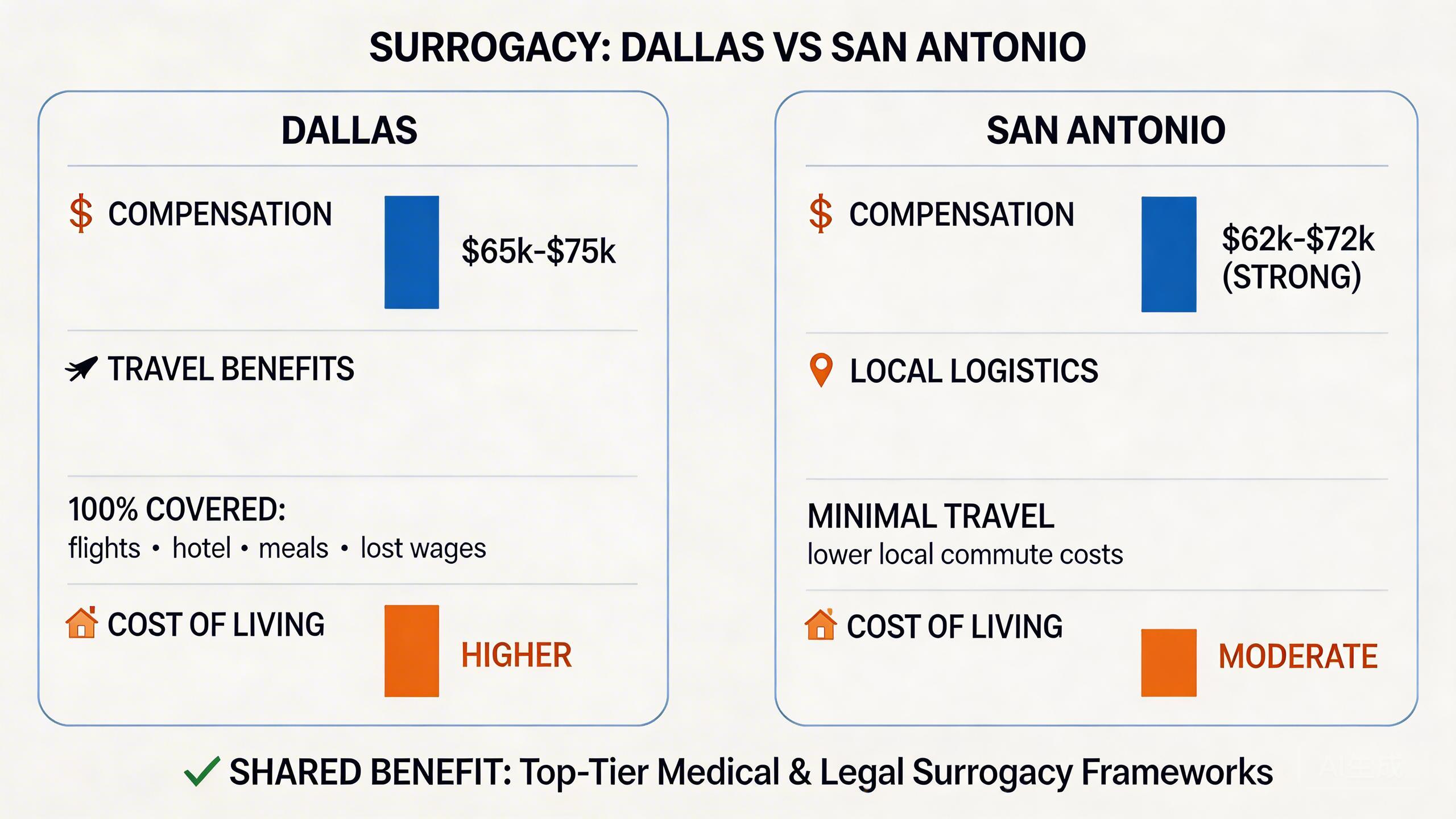
In San Antonio, the cost of living can be slightly more moderate than in Dallas, but surrogate compensation remains strong because of the excellent medical facilities and legal framework in place. The feeling I got from surrogates there was that the process felt very supported and professional, which is priceless.
3. Mid-Sized Cities & Rural Areas: Factors That Influence Pay
This is where I saw more variation. For surrogates in cities like El Paso, Lubbock, Amarillo, or in more rural parts of Texas, the base compensation might start a bit lower. However, this is often negotiable and balanced by other factors.
The main considerations are travel and logistics. If your chosen clinic is in Dallas but you live in Midland, you’ll be compensated for all travel—flights, hotels, meals, and lost wages for you and a companion. This can add up significantly. Some intended parents may offer a slightly higher base to offset the perceived inconvenience of frequent travel.
| Region | Typical Base Compensation Range (First-Time Surrogate)* | Key Influencing Factors |
|---|---|---|
| Dallas, Houston, Austin | $55,000 – $65,000+ | High cost of living, concentration of clinics/agencies, high demand. |
| San Antonio, Fort Worth | $50,000 – $60,000+ | Strong medical infrastructure, moderate-to-high demand. |
| Other Texas Cities & Rural Areas | $45,000 – $55,000+ | Travel compensation is critical, may be balanced with other benefits. |
| *These are estimated ranges based on my research and community discussions. Actual pay depends on agency, experience, and specific circumstances. | ||
My Biggest Takeaways on Regional Pay Differences
After all my conversations and research, here’s what stuck with me:
- Base Pay is Just the Start: Always look at the entire compensation package—monthly allowances, embryo transfer fees, maternity clothing allowance, and most importantly, travel reimbursements.
- Your Agency is Your Advocate: A good agency based in Texas will know these regional nuances and fight to get you fair compensation, no matter your zip code. Don’t be afraid to ask them, “How does living in [Your City] impact the typical compensation structure?”
- Experience Pays: In every city, a proven track record (being a gestational carrier for a second or third time) commands significantly higher compensation.
- It’s Personal, Not Just Geographical: Ultimately, the match with the intended parents matters most. A fantastic, supportive relationship from anywhere in Texas can be more valuable than a slightly higher pay check in a stressful match.
“I live outside of Abilene. While my base pay was adjusted, my intended parents covered all my travel to Dallas beautifully, first-class, and were so grateful I was willing to make the journey. The total financial and emotional package was perfect for me.” – Chloe, Surrogate Mother in West Texas
Remember, these are my observations from within the community. Your journey is unique. The most important thing is to work with a reputable agency that will ensure you are fully informed and fairly compensated for the incredible gift you’re giving, no matter which part of the Lone Star State you call home.