
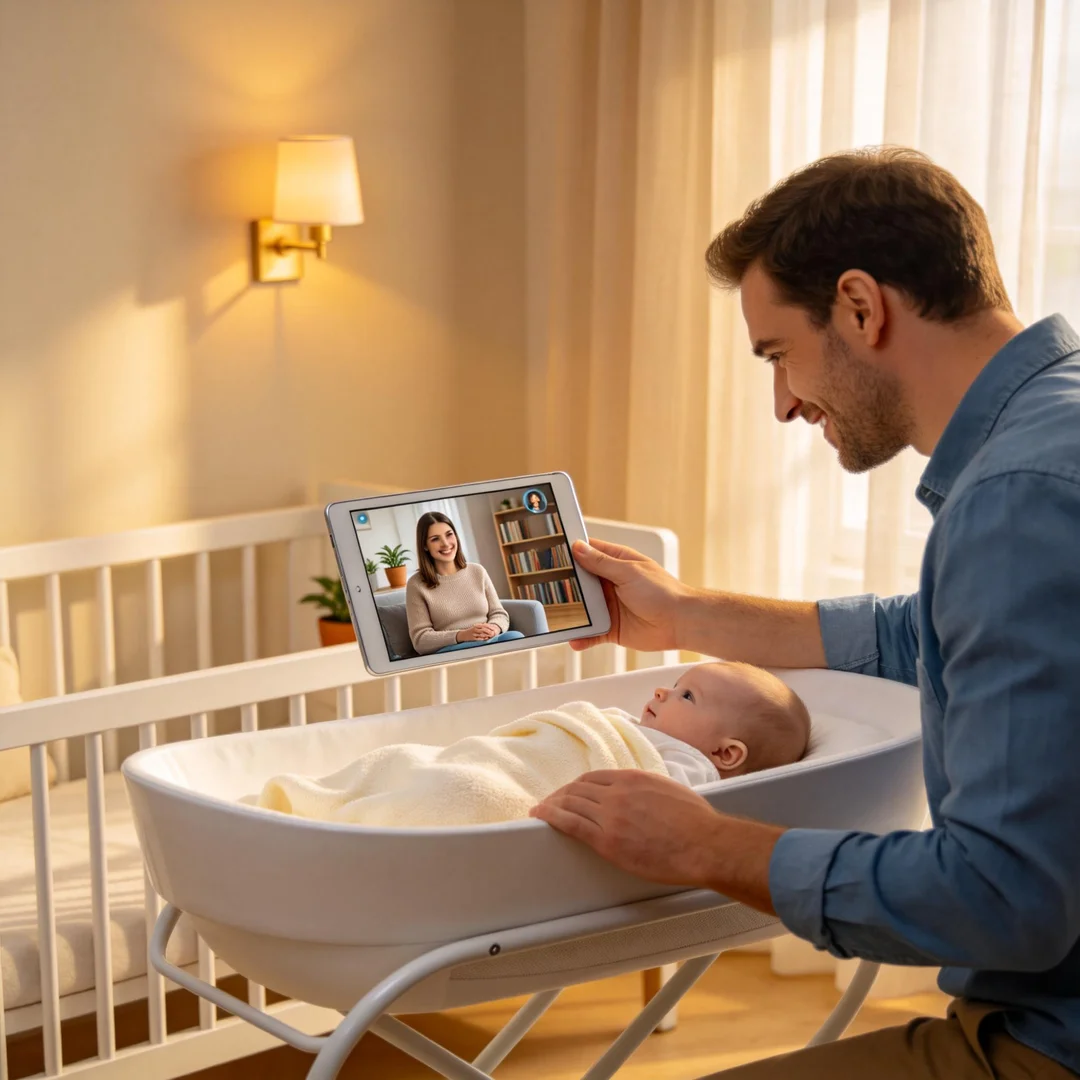
I’m sitting here in my living room, watching the late afternoon sun hit the carpet. My son—the tiny, seven-pound miracle we just brought back from Houston—is finally asleep in his swing. The house is quiet, which, if you’re a new parent, you know is a rare and fleeting gift.
In the previous chapters, we talked about the “sprint”—the legal paperwork, the high-tech hospital check-ins, the delivery, and the frantic dash to the Mickey Leland Federal Building for that blue passport. But now that the dust has settled and we’re back in our own space, I want to talk about the part of the journey that people often skip over in the brochures.
I want to talk about the “Beyond.” Specifically, I want to talk about the recovery and support for the woman who made all of this possible. Because here’s the “Old Zhang” truth: your journey as a parent is just beginning, but your surrogate’s journey toward physical and emotional wholeness is in a delicate, critical transition. In Houston, 2026, we don’t just “collect a baby” and disappear. We lean into a support system that ensures the woman who gave us everything isn’t left behind in the “post-birth drop.”
Chapter 1: The “Invisible” Fourth Trimester
In the world of surrogacy, the pregnancy is a high-speed chase. For nine months, you are obsessing over every ultrasound, every kick, every gram of protein she eats, and every “A+” score on her glucose tests. You’re in constant contact. You’re teammates.
But then, the baby arrives.
The second that baby is handed over, the spotlight shifts with a jarring, almost violent speed. The doctors and nurses are suddenly swarming the newborn. You, the Intended Parents, are frantically figuring out the car seat and the first feeding. And the surrogate? She’s often left in a strange, quiet middle ground. She’s the hero who just finished the marathon, but everyone is at the finish line taking photos of the trophy, and she’s walking back to the locker room alone.
In Houston, we’ve learned to call this the “Fourth Trimester.” For a surrogate, this isn’t just about “getting her body back.” It is a complex, delicate cocktail of hormonal shifts, physical healing, and the emotional recalibration of having a very busy, very loud “roommate” move out after nine months of constant companionship.
1.1 The Hormonal “Crash”: The Physiological Cliff
Let’s talk science for a second, because “baby blues” doesn’t even begin to cover it. Within 48 hours of birth, the estrogen and progesterone levels that have been sky-high for months don’t just dip—they plummet. It is a physiological cliff.
Our surrogate, Sarah, lives out in Katy, about 30 minutes west of the Medical Center. She’s as tough as they come, but she was incredibly candid with us about those first few days back home. She described it as a “heavy, gray fog” that settled over her the moment the adrenaline of the hospital stay wore off.
“It’s not sadness about the baby going to you guys,” she told us over FaceTime. “It’s just that my brain doesn’t know what to do with the silence. My body thinks it’s supposed to be nursing or nesting, but the ‘reason’ for all those hormones is in a different house.”
Recognizing this “crash” as a medical reality, not a personal weakness, is the first step in being a supportive partner.
1.2 The Physical Toll: The Marathon’s Aftermath
Whether it was a smooth vaginal birth or a C-section at The Woman’s Hospital of Texas, her body has just undergone the most intense physical event a human can endure.
Imagine carrying a backpack made of lead for 40 weeks and then suddenly dropping it while your muscles are still screaming.
- The “L&D” Reality: Even with the best care in the Texas Medical Center (TMC), there is tearing, there is blood loss, and there is the sheer exhaustion of labor.
- The C-Section Curveball: If she had a C-section, she’s recovering from major abdominal surgery while trying to get back to her own kids’ soccer games.
She doesn’t just need a “thank you” card; she needs time, space, and a medical safety net that doesn’t disappear just because the baby is in a nursery in The Heights.
1.3 The Houston Advantage (2026): Postpartum Remote Monitoring
This is where the “Houston Advantage” really saved us. In 2026, the top-tier agencies here have partnered with TMC hospitals to launch the Postpartum Remote Monitoring (PRM) program.
When Sarah was discharged to go home to Katy, she wasn’t just given a bottle of ibuprofen and a “good luck.” She was sent home with a sleek, medical-grade wearable device that synced directly to her OB/GYN’s portal at the Medical Center.
- What it tracked: Her blood pressure, heart rate, and oxygen levels 24/7 for the first two weeks.
- The “Safety Net”: Postpartum preeclampsia is a silent killer that can strike days after birth. On day four, Sarah’s device flagged a spike in her blood pressure. Her doctor got an automated alert, called her immediately, and adjusted her medication before it became a crisis.
Knowing that she was being “watched over” by the best doctors in the world, even while she was napping on her couch in Katy, gave us a level of peace that no amount of flowers could provide.
💡 Old Zhang’s Reality Check:
If you are an IP, do not assume “no news is good news” in the first week.
- Acknowledge the Crash: Ask her, “How are your energy levels?” or “How is the ‘fog’ today?” It shows you understand the biology, not just the sentiment.
- Verify the Tech: If your agency isn’t using a Remote Monitoring program in 2026, ask why. In a medical mecca like Houston, there is no excuse for leaving a surrogate’s health to guesswork.
Chapter 2: The IP’s Role – Being a Partner, Not a “Client”
There is a massive temptation in the world of high-stakes surrogacy to fall into the “Customer Service” trap. You’ve paid the agency fees, you’ve funded the escrow, and you’ve signed the contracts. You might think, “The agency has a postpartum coordinator, right? They’ll handle her recovery.” Wrong. If you want to maintain that “sacred partnership” we forged over steaks at Pappas Bros., you can’t outsource the heart of the journey. In 2026, being a “High-Value Intended Parent” means being “boots on the ground” for her recovery, even if you’re physically thousands of miles away. You have to move from being a “client” who received a “service” to being a partner who is invested in a human being’s wholeness.
Here is how we handled postpartum support from our Airbnb in The Heights without being “overbearing” or making her feel like we were hovering.
2.1 The “Houston Meal Train”: Nourishing the Whole House
When Sarah got home to her family, she wasn’t just a recovering patient; she was a mom to two energetic kids and a wife to a husband, Jim, who had been holding down the fort for nine months. The last thing that household needed was the stress of: “What are we eating for dinner?”
The “2026 Tech” Way
In the old days, you’d send a generic $100 gift card to a pizza chain and call it a day. In 2026, we used the “Houston Foodie Protocol.” We collaborated with Jim to find out their favorite local spots and then used a concierge delivery service to schedule a “Meal Train” for their first two weeks home.
- The Variety: One night, it was a massive spread of brisket and ribs from Killen’s BBQ (because nothing says “Texas recovery” like protein). The next, it was a spread of “Mother Earth” grain bowls from Local Foods in Upper Kirby to help her body get the nutrients it needed to heal.
- The Impact: It wasn’t just about the food. It was about the message: “We see your family. we know Jim is tired, too. We want your kids to have a hot meal while you rest.” It turned a logistical headache into a nightly gift.
2.2 The “Self-Care” Stipend: Healing the Soul, Not Just the Stats
In our initial escrow agreement, we didn’t just account for “Medical Bills.” We fought to include a “Wellness & Recovery” fund. This wasn’t for co-pays or prescriptions; this was for her soul.
Medical insurance in the U.S. is notoriously “functional”—it pays to make sure you aren’t dying, but it rarely pays to make sure you’re thriving. We wanted Sarah to thrive.
1. The Mobile Postpartum Massage
Once her OB/GYN at the Texas Medical Center gave the “all-clear” for light physical touch, we didn’t ask her to drive to a spa. We arranged for a Mobile Postpartum Massage Therapist—a specialist who understands the unique ergonomics of a body that has just birthed—to go to her home.
- The Result: She could stay in her pajamas, her kids could be in the other room, and she could have sixty minutes of pure, restorative silence.
2. Pelvic Floor Therapy: The 2026 Standard
In many parts of the world, pelvic floor health is an afterthought. But in the Houston surrogacy market of 2026, Pelvic Floor Physical Therapy (PFPT) is considered the “Gold Standard” of recovery.
- The “TMC” Connection: We made sure her escrow covered a full 12-week course at a specialized clinic within the Texas Medical Center.
- The Long-Term Gift: This isn’t about the baby. This is about her long-term quality of life—ensuring she doesn’t deal with the common, lingering physical issues that often follow childbirth. It was our way of saying, “We care about how you feel five years from now, not just how you feel today.”
2.3 Respecting the “Space-Support” Ratio
The hardest part of being a partner during recovery is knowing when to lean in and when to back off.
- The Temptation: You want to send her 50 photos of the baby every day because you’re excited.
- The Reality: She needs to sleep. She needs to bond with her own kids. She needs to not be “on call” for you anymore.
We established a “check-in” rhythm. We’d send one high-quality photo of the baby in the morning with a simple: “No need to reply, just wanted to show you his first real bath! How are you feeling today?” It gave her the connection without the “social debt” of having to perform for us.
💡 Old Zhang’s “Partner” Checklist:
- Don’t Ask, Just Do (Within Reason): Instead of saying “Do you need food?” (she’ll say no), say “We’re sending Killen’s over at 6:00 PM on Tuesday, is that okay?” 2. Include the Spouse: Jim was the “unsung hero.” We sent him a “Thank You” gift card to a local hardware store for a project he’d been wanting to start.
- The “Medical Reserve”: Keep a small amount of “emergency wellness” cash in escrow. If she suddenly feels she needs an extra therapy session or a specific supplement, you want the answer to be “Yes” instantly.
Chapter 3: Navigating the “Post-Birth Drop”
In the world of 2026 surrogacy, we talk a lot about the “Big Day”—the delivery, the handover, the tears of joy. But we don’t talk enough about the “Post-Birth Drop.” For nine months, Sarah was the absolute sun in our solar system. She was getting daily “How are you?” texts, weekly flower deliveries, and constant check-ins from the agency, the doctors at the Texas Medical Center, and us. Her belly was a physical conversation starter in her neighborhood in Katy. She was carrying the most precious cargo on the planet, and everyone treated her like a queen.
Then, at 8:42 AM on a Tuesday, the baby was born.
Suddenly, the “cargo” was in our arms. We were at the Mickey Leland Federal Building getting a passport. We were at IAH boarding a plane. And Sarah? She was back in her quiet house, her body physically aching, her hormones crashing, and the constant pings on her phone suddenly… stopped.
It can feel like a sudden, cold silence. If you aren’t careful, a surrogate can go from feeling like a hero to feeling like a “vessel” whose job is done and whose “clients” have moved on. In Houston, we decided that wasn’t going to be our story. We didn’t want a transaction; we wanted a lifelong bond.
To combat the “Drop,” we implemented what our agency calls the “Two-Week/Two-Month/Two-Year Rule.”
3.1 The “Two-Week” Sprint: Keeping the Connection Warm
The first 14 days are the most dangerous for the “Drop.” This is when the physical pain is at its peak and the hormone “cliff” is the steepest.
- Daily “No-Pressure” Updates: We made it a point to send one high-quality photo or video of the baby every single morning. But the key was the caption. We didn’t just talk about the baby’s diapers; we talked about her.“He’s finally sleeping in his own bassinet! But honestly, Sarah, we’re just thinking about you today. How are you sleeping? Is the incision feeling any better? Please don’t feel like you have to reply—we just want you to know you’re on our minds.”
- The “No-Reply” Clause: This is vital. You want to provide support without giving her another “chore” to do. By telling her she didn’t have to reply, we gave her the emotional connection without the social obligation.
3.2 The “Two-Month” Milestone: The Surrogate-versary
Around the eight-week mark, the “new baby” excitement has faded for the rest of the world. This is usually when the surrogate has her final medical clearance at the TMC and the journey “officially” ends.
To mark this transition, we sent a “Surrogate-versary” gift to her home in Katy.
- The Gift: We worked with a local Houston jeweler to create a custom gold bracelet. It featured our son’s birthstone (Aquamarine for March) nestled right next to the birthstones of her two children.
- The Symbolism: It wasn’t just a “thank you.” It was a statement: Our families are now permanently linked. It showed her that we didn’t see her as a temporary part of our lives, but as a foundation of our family’s history.
3.3 The “Two-Year” Commitment: The Long-Haul Promise
We didn’t want the relationship to fizzle out into “Merry Christmas” texts once a year. We made a formal commitment to a FaceTime Birthday Party every year for at least the first two years (and hopefully forever).
- Why it matters: It allows Sarah to see the “result” of her sacrifice. Seeing a toddler running around, laughing and thriving, is the ultimate emotional “ROI” for a surrogate. It validates everything she went through in 2026.
3.4 The Mental Health Safety Net: The “Empty Belly” Syndrome
Even with all our support, there are things Sarah needed to talk about that we just couldn’t understand. She experienced what some Houston support groups call “Empty Belly Syndrome”—that strange, phantom feeling of looking for a kick that isn’t there anymore.
Our Houston agency provided a dedicated “Post-Surrogacy Support Group.” * The Tribe: Sarah met virtually once a week with four other women who had all delivered in the Medical Center in the same month.
- The Safe Space: They could talk about things that felt “taboo” to say to us—like feeling a bit blue, or how to handle a nosy neighbor at the Katy H-E-B who asked, “Wait, where’s the baby?” Having that professional mental health “safety net” ensured that while we were supporting her as friends, the agency was supporting her as experts.
💡 Old Zhang’s “Connection” Checklist:
- Don’t “Ghost” After the Passport: Many IPs disappear once they get their travel docs. Don’t be those people. Stay in Houston (digitally) for at least 90 days post-birth.
- Respect the Spouse: Jim felt the “Drop,” too. We made sure to send him a “Guy’s Night Out” gift card to a local Houston brewery. He was her primary support system; he needed to feel appreciated.
- Be Honest About the “New Normal”: If you’re struggling with sleep or the baby is colicky, tell her! Surrogates love to help. Letting her give you a bit of “mom advice” over text makes her feel like the valued partner she is.
Chapter 4: The Medical Follow-Up in the TMC
When you’re an international or out-of-state parent, the pressure to get your baby’s passport and catch the first flight home is immense. You’re sleep-deprived, you’re missing your own bed, and the “Airbnb lifestyle” starts to wear thin after a month. But one of the best decisions we made was intentionally timing our departure to happen after Sarah’s six-week postpartum checkup.
We didn’t just want to hear that she was okay via a text message from a thousand miles away. We wanted to be there. We wanted to see her walk out of that clinic with our own eyes.
In Houston, the Texas Medical Center (TMC) isn’t just where the journey starts; it’s where the clinical story finds its period. We met Sarah and Jim at the Women’s Health Plaza on a humid Tuesday morning. It’s this gleaming, glass-and-steel tower that feels like it belongs in a sci-fi movie, but the energy inside is remarkably human.
4.1 The “Hero’s Welcome” at Women’s Health Plaza
Walking into the clinic with a six-week-old baby in a stroller felt like a victory lap. But what struck me most wasn’t the attention we got—it was the way the staff treated Sarah.
In some hospitals, a surrogate is just another patient code. But in the specialized wings of the TMC, these nurses and doctors are trained in the “Surrogacy Hero” protocol. When Sarah checked in, the receptionist didn’t just call her name; she beamed.
“Sarah! It is so good to see you moving so well. And oh my goodness, is this the little guy? Look at those cheeks!”
They treated her like a returning champion. For Sarah, who had spent the last month in the “quiet middle ground” of recovery in Katy, that professional validation was huge. It reminded her that what she had done wasn’t just a personal favor—it was a world-class medical feat.
4.2 The “All-Clear”: A Collective Exhale
We sat in the waiting room with Jim while Sarah went back for the clinical exam. This is the “Boring-but-Vital” part of 2026 postpartum care:
- The Physical Check: Making sure the “plumbing” is back to normal, the incision (if applicable) is healed, and the pelvic floor is responding to therapy.
- The Mental Health Screen: A deep-dive into the “Post-Birth Drop” we talked about earlier.
When the door finally opened and Sarah walked out with her OB/GYN, the doctor gave us a thumbs-up. “She’s a rockstar,” the doctor said. “Perfect recovery. She’s officially cleared for all normal activity.”
I can’t describe the “collective exhale” that happened in that hallway. It was like a physical weight lifted off all four of us. Up until that moment, there was always a tiny, nagging fear in the back of our minds: What if she’s not okay? What if we “broke” her? Hearing a TMC expert say “Perfect” was the closure we didn’t even realize we were desperate for.
4.3 The Final Handshake: Beyond the Code
After the appointment, we didn’t rush to the parking garage. we sat in the lobby cafe for an hour. This was our “Final Handshake.”
- No More “Business”: We didn’t talk about escrow. We didn’t talk about medical bills or legal filings. All of that “Red Tape” was officially behind us.
- The Human Connection: Instead, we talked about how our son had gained three pounds. We showed Sarah a video of his first “real” social smile—that gummy, lopsided grin that happens around week six.
- The Handover of Memories: Sarah told us about her own kids’ reactions to the “journey” now that the belly was gone. It was a conversation between friends, not “clients” and a “provider.”
4.4 Why the TMC Follow-Up is Different
In Houston, this six-week mark isn’t just a box to check on an insurance form. It’s the final medical validation of the miracle. 1. The Specialist Edge: Because she was seen at a top-tier clinic, we knew the “All-Clear” was backed by the best diagnostic tools in the country.
2. The Shared Milestone: Being there allowed us to say “Thank You” in a clinical setting where the magnitude of her gift was fully understood by the professionals around us.
💡 Old Zhang’s “Follow-Up” Tip:
If you are an IP, try to make this appointment. If you can’t be there physically, FaceTime in. * Why? It closes the loop for you, too. You need to see that she is healthy and happy to truly move forward with your life without “Survivor’s Guilt.”
- The Gesture: Bring a small, non-contract gift for the clinic staff. A box of local Houston pastries goes a long way in thanking the people who kept your surrogate safe.
Chapter 5: Defining the “New Normal”
So, what happens now? Are we still “Surrogacy Partners”? Are we friends? Are we family?
The “Beyond” is different for everyone. Some IPs and surrogates prefer a “clean break,” and that’s okay if that was the agreement. But for us, and for most of the Houston journeys I’ve seen in 2026, the relationship evolves into something I call “Extended Family 2.0.”
- The Boundaries: We’re respectful of her time. We don’t text her every time the baby has a diaper rash.
- The Transparency: We told Sarah that whenever she’s ready, she’s welcome to visit. We want our son to know her. We want him to grow up knowing the story of the brave, kind woman in Texas who helped bring him into the world.
Sitting here now, looking at my son, I realize that “Recovery” isn’t just about Sarah’s body or my sleep schedule. It’s about the recovery of a “normal” life after a year of “extraordinary” circumstances.
💡 Old Zhang’s Final Advice for the “Beyond”
If you’re planning your 2026 journey, remember this: The way you treat your surrogate after the birth says more about you than the way you treated her during the pregnancy. 1. Don’t Ghost: The “Post-Birth Drop” is real. Stay present.
2. Budget for Support: Don’t spend every last cent on the nursery. Keep a “Support Fund” for her postpartum care.
3. Listen: If she says she needs space, give it to her. If she says she’s struggling, help her find the resources in Houston to get through it.
Houston gave us our family, but Sarah gave us our son. We owe it to her to make sure her “Beyond” is just as beautiful as our beginning.